
Last updated October 16, 2026
 Wrought iron
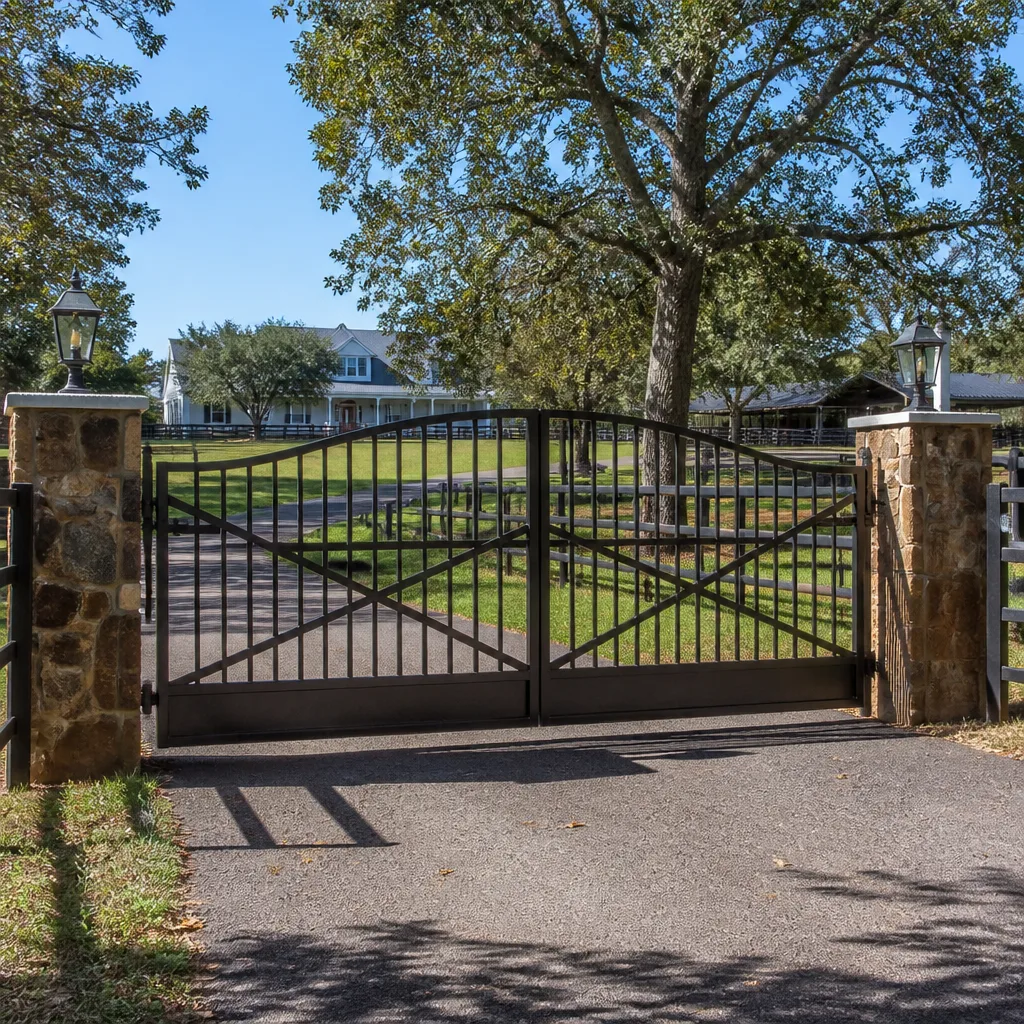 Farm & ranch
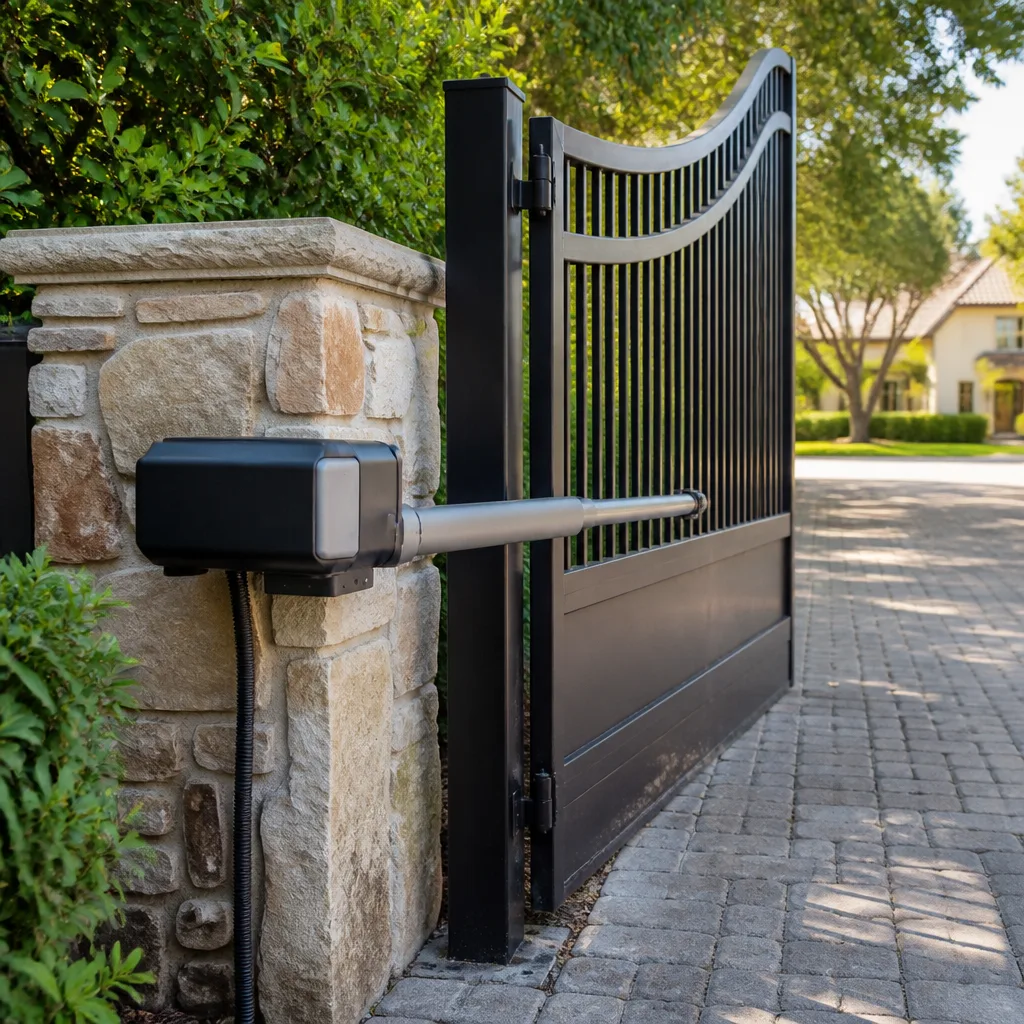 LiftMaster operators
Free on-site gate assessment - hinges, posts, and your LiftMaster or Nice gate operator checked before anything is quoted
The assessment is free and the quote is the invoice.
Get your free estimateHow to Hire a Gate Repair Contractor in Miami: A Step-by-Step Guide
Florida does not require a specialty gate contractor license. Read that again, because it changes everything about how you should hire someone to fix your gate in Miami. The person quoting you $180 cash to repair your opener may be working entirely outside any regulatory oversight the moment they open the control board and touch a 120-volt connection. This complete guide to gate repair in Miami gives you a concrete vetting script, the exact documents to demand before anyone turns a bolt, and the red flags that are uniquely common in Miami’s contractor market. By the time you finish, you’ll know more about hiring a gate repair contractor than most people learn after their first expensive mistake.
Quick Answer
Hiring a gate repair contractor in Miami comes down to three non-negotiable steps: verify the contractor’s Florida license classification matches the electrical or structural work your gate actually requires, demand a written estimate before any work starts, and insist on a labor guarantee in writing alongside any parts warranty. Most gate opener repairs in Miami run $180 to $450 before parts, and a legitimate contractor will put that number on paper before touching your gate. If a contractor can’t produce a license number, a written price, or a labor guarantee, end the conversation and find a Gate Repair in Miami company that can.
Styles & brands we work with
Table of Contents
- Why Florida’s Licensing Loophole Makes Gate Repair Riskier Than You Think
- The Three Florida License Classifications That Apply to Gate Work
- How to Verify a License on the DBPR Lookup Tool in Under Five Minutes
- Five Questions to Ask on the Phone Before Scheduling a Visit
- What a Legitimate Written Estimate Must Include in Miami-Dade County
- Parts Warranty vs. Labor Guarantee: Why Only One Protects You
- Red Flags Specific to Miami’s Gate Repair Market
- The Full Step-by-Step Hiring Process
Why Florida’s Licensing Loophole Makes Gate Repair Riskier Than You Think
Every state regulates contractors differently, and Florida’s approach to gate work is unusually loose. The state does not issue a dedicated “gate contractor” license. What that means in practice: someone with a handyman-level business license can legally replace gate hinges, adjust a chain, or bolt on a new keypad all day. But the moment that same person opens the control box and starts working on the motor circuit, the low-voltage wiring, or anything that connects to your home’s power supply, they have crossed into regulated territory. And here’s the uncomfortable part: nobody is standing there to tell you when that line gets crossed.
We’ve seen the aftermath in Miami neighborhoods from Kendall to Coral Gables. A homeowner pays cash for a “simple opener fix,” and three weeks later the gate arms itself at 2 a.m. because a limit switch was wired wrong. The homeowner calls the guy back. No answer. Then they call us, and the repair costs twice what it would have if it had been done correctly the first time. The risk isn’t hypothetical, it’s structural. Florida’s regulatory gap doesn’t stop unlicensed work. It just relocates the responsibility for catching it onto you, the homeowner, at the moment when you’re least equipped to evaluate what’s happening inside a control board.
In Miami specifically, the climate compounds the issue. Salt air corrodes circuit boards faster than inland customers ever experience. Humidity causes solder joints to fail. Tropical downpours find their way into enclosures that would stay dry elsewhere. A contractor who doesn’t understand Miami’s specific environmental load on gate electronics will diagnose your problem as “the board is bad” when the real issue is a corroded ground connection that will destroy the replacement board in six months. Hiring the right person in Miami isn’t just about licensing. It’s about finding someone who knows what this city’s climate does to gate hardware.
The Three Florida License Classifications That Apply to Gate Work
When a gate repair crosses into regulated territory, three Florida license types cover the work. Understanding them is the difference between hiring someone who’s answerable to the state and hiring someone who can disappear without consequence.
Electrical Contractor (EC or ER): This is the classification that matters most for gate opener repair. An EC license (Electrical Contractor) or ER license (Electrical Registered Contractor) authorizes the holder to work on the electrical components of your gate system, including the motor, the control board, the transformer, and any line-voltage connections. If your gate opener is hardwired to your home’s electrical panel, this is the license that covers that work. When someone without this license rewires your opener and your home’s electrical system gets damaged, your homeowner’s insurance claim gets complicated fast.
Certified General Contractor (CGC): Structural gate work falls under this classification. Replacing a heavy sliding gate, resetting gate posts in concrete, repairing a sagging cantilever gate, or any work that affects the structural integrity of the gate itself requires a general contractor’s license. In Miami-Dade County, which has some of the strictest building codes in the state due to hurricane wind load requirements, structural gate work often triggers permit requirements that a handyman will simply ignore.
Alarm System Contractor (EF or EG): Many modern gate systems integrate with access control, intercoms, and security systems. If your gate opener ties into an alarm panel, a telephone entry system, or any low-voltage security wiring, an alarm system contractor license (EF for electrical alarm, EG for general alarm) is the relevant classification. This one surprises homeowners because they don’t think of their gate as a security device, but once an intercom or keypad entry system is involved, that’s exactly what it is.
How to Verify a License on the DBPR Lookup Tool in Under Five Minutes
The Florida Department of Business and Professional Regulation (DBPR) maintains a public license lookup tool at myfloridalicense.com. Using it takes less time than ordering a cafecito, and it’s the single highest-value action you can take before hiring anyone. Here’s the exact process:
- Go to myfloridalicense.com and click “Verify a License” on the homepage.
- Select “Electrical Contractors” from the license category dropdown if you’re checking for electrical work, or “General Contractors” if the job is structural.
- Enter the license number the contractor gave you, or search by the person’s name and Miami as the city.
- Check three things: the license status says “Active” (not “Delinquent” or “Inactive”), the expiration date is in the future, and the name on the license matches the person who will actually do the work.
- Note any complaints or disciplinary actions listed. DBPR shows enforcement history, and even one unresolved complaint about electrical work should be a dealbreaker.
One nuance that trips people up: a contractor might show you a business license issued by Miami-Dade County or the City of Miami. A business license (also called an occupational license) only means the person paid a fee to operate a business. It says nothing about their competence to touch electrical systems. Do not confuse a business tax receipt with a DBPR contractor license. They are not the same thing, and demanding the right one is what protects you.
Five Questions to Ask on the Phone Before Scheduling a Visit
The phone call before a visit is your first filtering step. A legitimate contractor answers these questions directly. Someone who’s about to waste your time gets defensive, vague, or tries to redirect. Here’s the script:
- “What’s your Florida contractor license number, and what classification is it?” The correct answer is a number you can verify on DBPR, with a classification that matches the work. An evasive answer like “we’re licensed and insured, don’t worry” is not an answer. It’s a deflection. End the call.
- “Will you send me a written estimate before starting work?” The only acceptable answer is yes. Not “we’ll see when we get there,” not “it depends on what we find.” Any contractor who has done this work in Miami knows what a typical opener repair costs before they arrive, and they can quote a range in writing. See our guide on Gate Opener Repair in Miami for typical price ranges.
- “Do you provide a labor guarantee in writing, or just a parts warranty?” This question separates serious contractors from parts-changers. A labor guarantee means if the repair fails, the contractor returns at no charge. A parts-only warranty means the manufacturer covers the part, but you pay labor all over again. Only the first one protects you.
- “What brands of openers do you actually work on?” If the answer is “all of them,” ask for a specific example. A contractor who says they have direct experience with LiftMaster, FAAC, BFT, Viking, Ghost Controls, DoorKing, Elite, and Mighty Mule isn’t bluffing. A contractor who can’t name more than one brand usually learns on your gate, at your expense.
- “Who is coming to my house, and can I track their arrival?” In 2026, there’s no excuse for a four-hour arrival window. Rideshare apps solved this problem a decade ago. A contractor who sends a background-checked, uniformed technician with a live, trackable arrival time is running a professional operation. A contractor who says “the guy will be there sometime between noon and five” is running a scheduling problem, and you’ll be the one who pays for it.
What a Legitimate Written Estimate Must Include in Miami-Dade County
Verbal quotes create legal exposure for you, the homeowner. In Miami-Dade County, where a handshake deal can turn into a lien dispute or a small claims case, a written estimate isn’t just good practice; it’s your only real protection. A legitimate written estimate includes all of the following:
The price, broken down. Labor and parts separated, so you know what you’re paying for the work itself and what you’re paying for the components. A single round number with no breakdown is not an estimate. It’s a guess with a dollar sign.
The scope of work, specifically described. “Repair gate opener” is not a scope. “Replace failed limit switch on LiftMaster operator, test full open/close cycle, adjust force settings, verify safety sensor alignment” is a scope. The difference matters when the repair fails and you need to show what was supposed to happen.
The parts to be installed, by brand and model. If the estimate says “new opener board,” ask for the manufacturer and part number. Generic part descriptions are how you end up with a knockoff control board that fails after one Miami summer.
The schedule. When the work starts, when it’s expected to be done, and what happens if it runs over. This matters more in Miami than elsewhere because afternoon thunderstorms routinely delay outdoor electrical work, and a contractor who doesn’t account for that reality hasn’t worked here long.
Payment terms. How much is due upfront, if anything, and when the balance is collected. At Calder Gate Repair Miami, the price on the invoice is the price quoted at the door, never a surprise. That’s the standard you should hold every contractor to. The “The Relay Standard” booking-to-invoice experience that we follow includes a live arrival time, before-and-after photos, and a digital invoice you pay from a link. Those aren’t extras. They’re baseline professionalism in 2026.
Parts Warranty vs. Labor Guarantee: Why Only One Protects You
The most overlooked document in a gate repair transaction is the warranty. Most homeowners glance at the word “warranty,” nod, and move on. But there are two fundamentally different protections hiding in that word, and only one of them is worth anything to you.
Parts warranty: This covers the component that was installed. If a new control board fails, the manufacturer replaces the board. That’s standard, and nearly every contractor offers it because it costs them almost nothing: the manufacturer carries the financial burden. But here’s the catch. When your new board fails in month three, someone still has to remove the old one and install the replacement. That labor costs $150 to $350 in Miami, and if all you have is a parts warranty, you’re paying it. The parts warranty protected the manufacturer. It didn’t protect your wallet.
Labor guarantee: This covers the workmanship. If the repair fails because it was done incorrectly, the contractor returns at no charge. No diagnostic fee, no labor charge, no “this is a different problem” qualifier. A real labor guarantee names its term: 90 days, 365 days, whatever it is. The term matters less than the existence of the guarantee itself, because a contractor who puts a labor guarantee in writing is signaling something important: they’re confident enough in their work to stake their own time on it.
We provide what we call the 365-Day Done Right Promise on every repair. If the repair isn’t right, we make it right. If a repair fails within 365 days, we return at no charge, no argument. That’s not a marketing phrase; it’s written on every job, alongside a written price before any work starts. When you’re comparing contractors in Miami, ask specifically: “What’s your labor guarantee, in writing, and what term does it cover?” A vague answer means you’ll be paying labor twice when the repair fails. And in our experience with Miami’s climate, repairs on gate openers fail far more often than they should because the first repair was rushed or the wrong part was used.
Red Flags Specific to Miami’s Gate Repair Market
Every city has contractor scams. Miami has its own variations, shaped by the local economy, the climate, and the demographics of the housing market. These are the specific patterns we hear about from customers who call us after a bad experience:
The storm-chaser upsell. After any significant storm blows through Miami-Dade, a new crop of “gate specialists” appears. They target homes with visible storm damage and push for full opener replacement when a repair would suffice. The hurricane-wind-force angle is their leverage: “This gate won’t survive the next storm.” Sometimes that’s true. More often, it’s a sales pitch attached to a repair that costs a third as much. A legitimate contractor gives you the repair option and lets you decide.
Cash-only after diagnosis. This one starts innocent. The technician diagnoses the problem, quotes a price, and then mentions that there’s a “cash discount” if you pay today. What they’re really doing is taking the transaction off the books, which eliminates your paper trail for the written estimate, the warranty, and any future dispute. If a contractor demands cash after providing a diagnosis, you have no documentation that the work even happened. Walk away.
The “parts not available locally” delay tactic. This is the move where the technician quotes a repair, takes a deposit, and then calls three days later to say the part is on backorder or “not available in Miami” so it’ll be another two weeks. The goal is either to wait you out until you agree to a more expensive replacement, or to collect deposits on jobs they never intend to finish. Genuine part shortages happen, but they’re rare for major brands like LiftMaster and FAAC, which have robust distribution networks serving South Florida. A contractor who works with nine major brands, including Viking, Ghost Controls, DoorKing, and Elite, can usually source parts within days, not weeks.
The unbranded diagnostic. “Your board is fried” is a conclusion, not a diagnosis. A real technician tells you what failed and why. The why matters because a board that failed due to a power surge needs surge protection added or the replacement will fail too. If your technician can’t explain the mechanism of failure, they’re guessing. And in Miami, where power surges during thunderstorms are a leading cause of opener board failure, that missing explanation is expensive.
The Full Step-by-Step Hiring Process
Here’s the complete process, from first search to final payment, in the order we’d tell a neighbor to do it:
- Document the symptom. Before you call anyone, write down what the gate is doing: won’t open at all, opens partway and reverses, makes a grinding noise, remote stopped working, keypad unresponsive. Also note which brand of opener you have (the label is usually on the motor housing) and whether the problem started suddenly or gradually. This information saves a diagnostic visit and helps the contractor bring the right parts.
- Get three phone quotes. Call three companies, ask the five questions from the section above, and get a price range over the phone. Most gate opener repairs in Miami run $180 to $450 before parts. If one quote is dramatically lower, that’s not a deal; it’s a discount on a problem. Check our Electric Gate Repair in Miami page for more detail on what affects price.
- Verify the license. Run the DBPR check on whichever contractor seems strongest. Five minutes now saves you from being the subject of a cautionary tale later.
- Schedule the visit with a trackable arrival time. Confirm that the technician is background-checked, arrives in uniform, and that you’ll receive a live arrival time you can track. If the company can’t do that, they’re behind the standard that’s now normal in Miami’s service market.
- Get the written estimate before work starts. Review the scope, the price breakdown, the parts list, and the schedule. Ask questions. A legitimate contractor welcomes questions because they know the estimate stands up to scrutiny.
- Confirm the labor guarantee in writing. Make sure the document includes both a parts warranty (from the manufacturer) and a labor guarantee (from the contractor). Note the term of the labor guarantee and what it covers.
- Approve the work and pay as agreed. No cash-only demands, no surprise line items, no “while I was in there” additions that weren’t authorized. The invoice matches the estimate, or the difference was explained and approved before the work continued.
- Save the documentation. Keep the invoice, the written estimate, and the warranty terms in one place. If something goes wrong, this paperwork is the difference between a quick resolution and a small claims filing.
This process takes about 20 minutes of active effort, spread across a day or two. It’s the same process we’d want a family member to follow when hiring anyone for work on their home, and it applies whether you’re hiring Calder Gate Repair Miami home or any other contractor in the city. The standard is the standard, and good companies meet it without being asked.
Common Mistakes to Avoid
- Hiring based on price alone. The cheapest quote in Miami usually reflects the cheapest approach: no license, no labor guarantee, no paper trail. You’re not saving money; you’re deferring it.
- Accepting a verbal quote. In Miami-Dade County, a verbal quote is legally thin protection if the invoice comes back higher. Always get the price in writing before work starts.
- Confusing a parts warranty with a labor guarantee. The first protects the manufacturer. The second protects you. Insist on both, and know which is which.
- Skipping the DBPR license check. Five minutes of verification prevents the most common and most expensive hiring mistake in Florida’s gate repair market.
- Not asking about brand experience. A technician who has never touched a Viking opener before is about to learn on yours. Miami’s salt air punishes installation mistakes faster than any other environment.
- Paying cash without a receipt. Cash payments are fine when accompanied by a written invoice. Cash without documentation is how you lose the ability to enforce a warranty or file a complaint.
- Ignoring the repair, hoping it goes away. A gate that intermittently fails is a gate that will permanently fail, usually at the worst possible moment. In Miami, that moment is often a hurricane evacuation when you need the gate either open or closed and it won’t do either.
See the difference
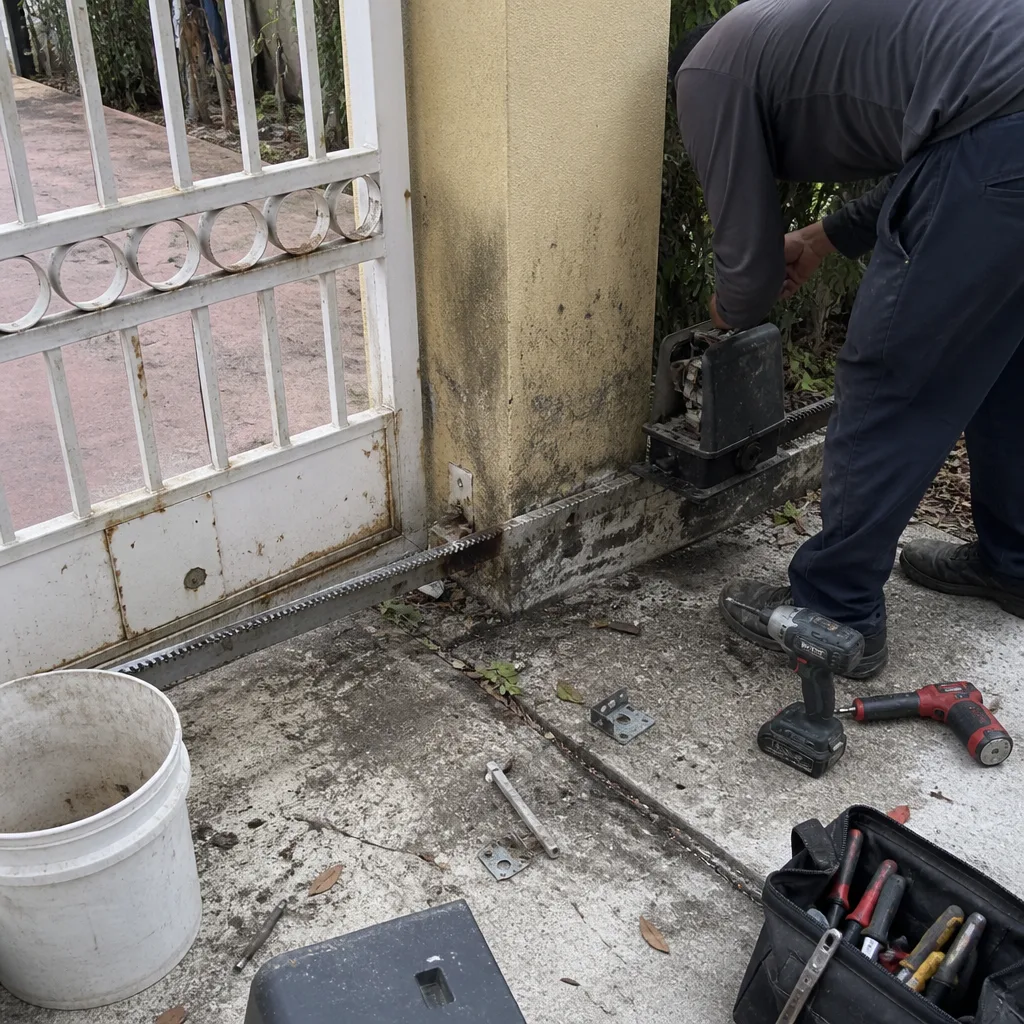 Before
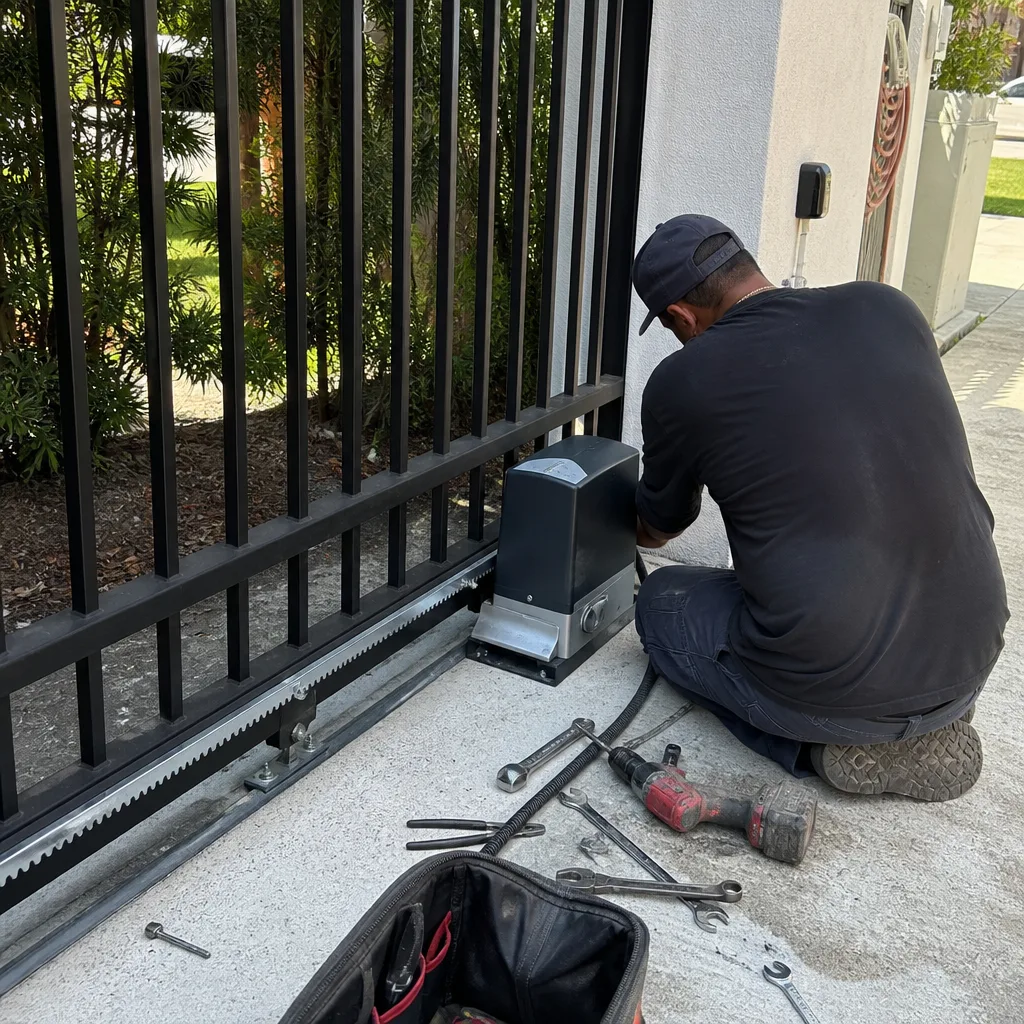 After
After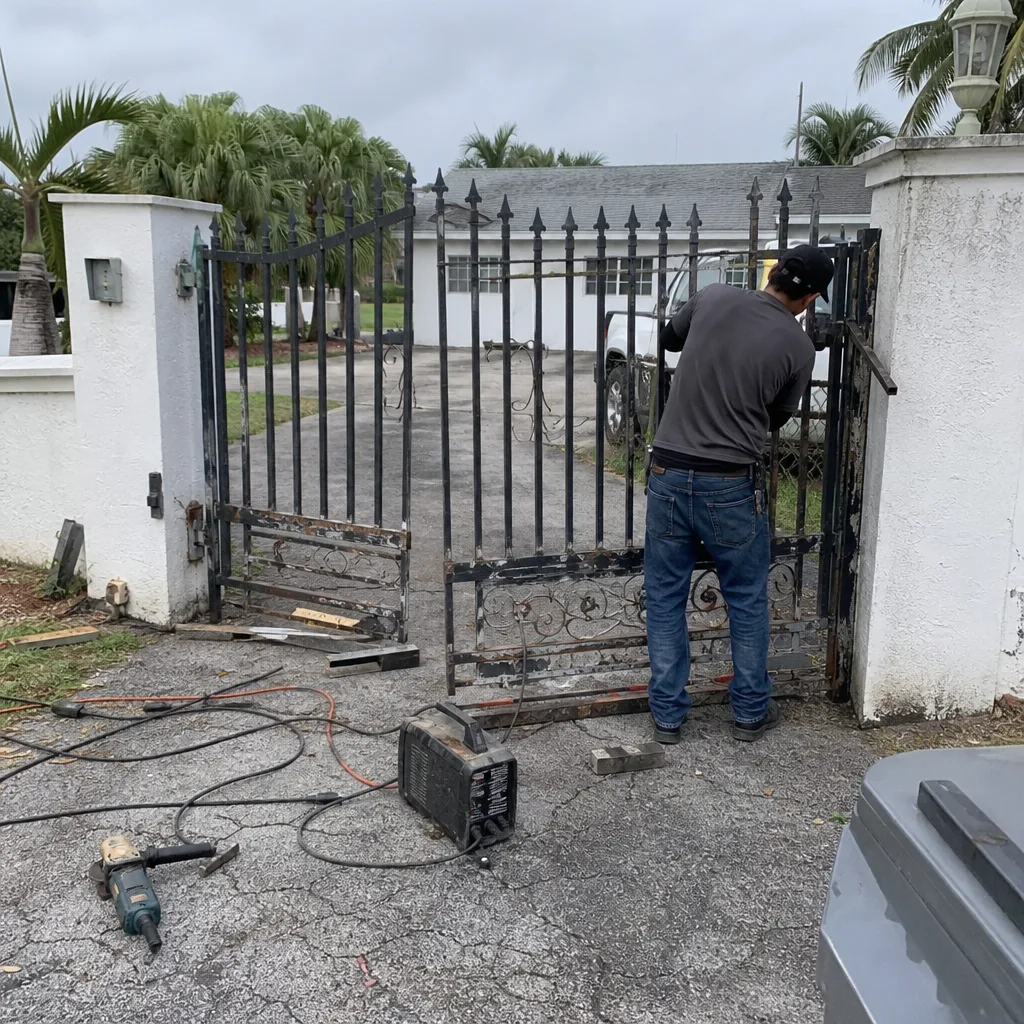 Before
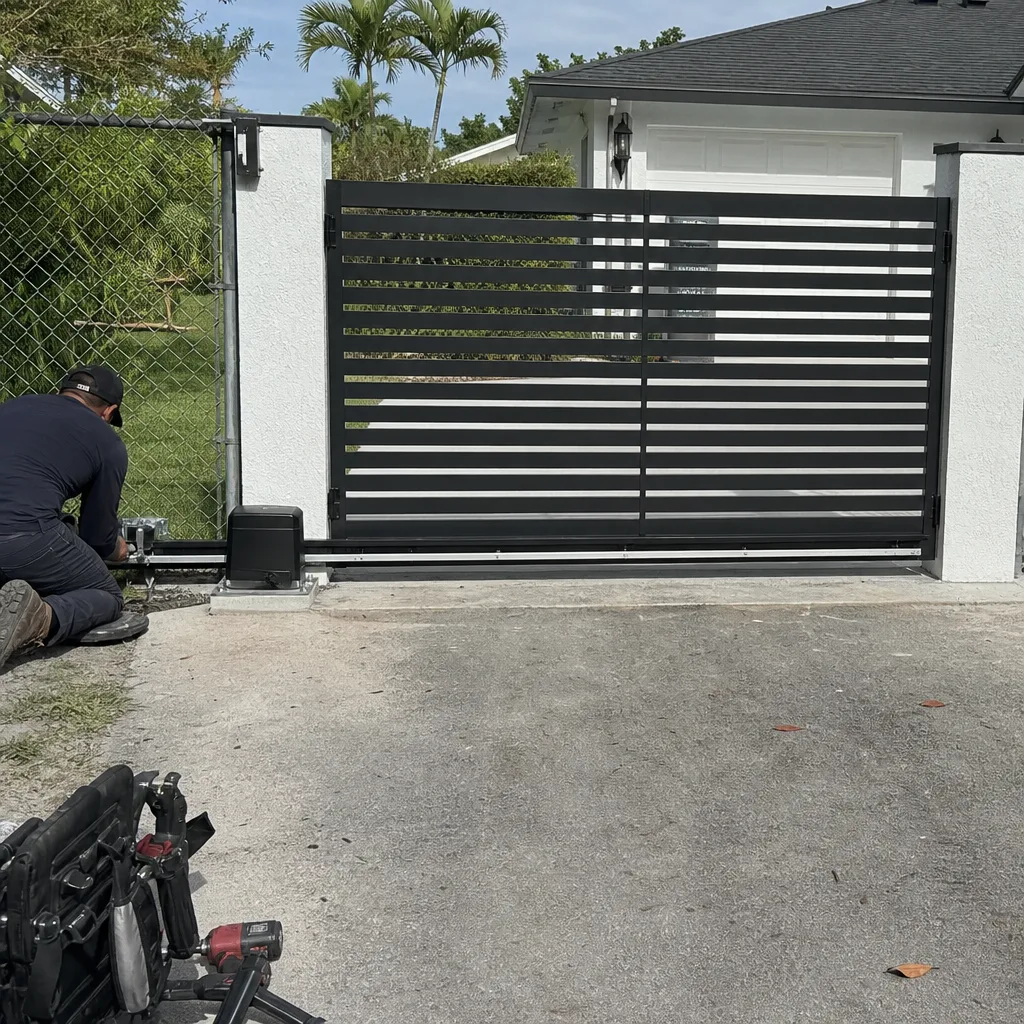 After
After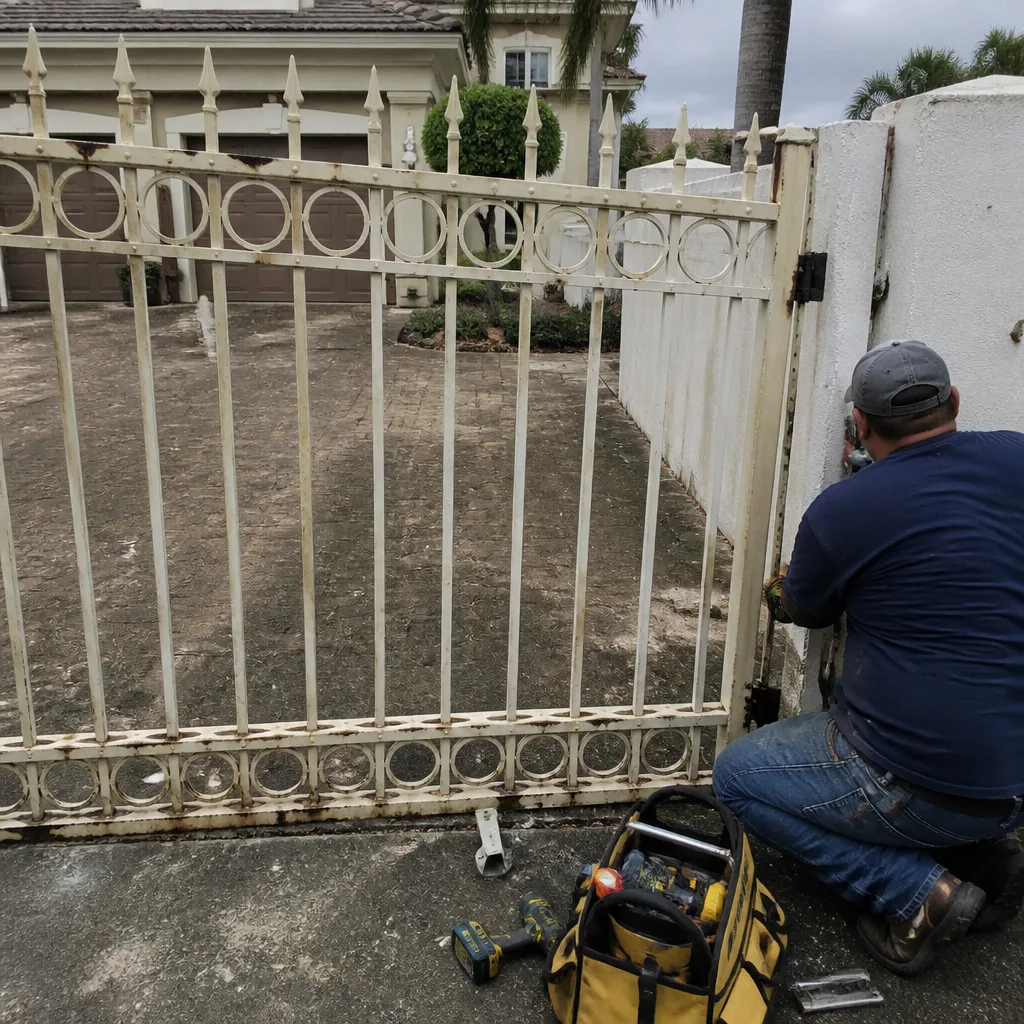 Before
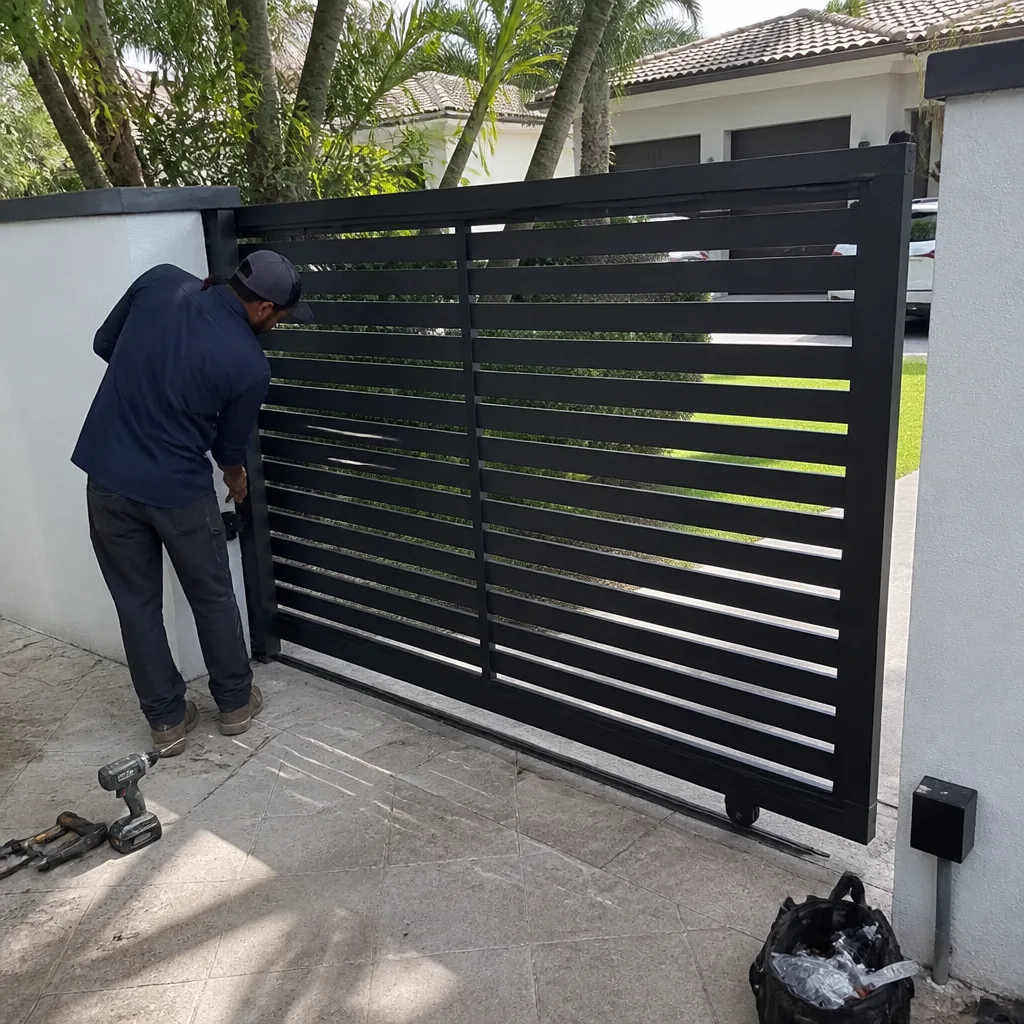 After
AfterWhen to Call a Professional
If your gate won’t open, won’t close, reverses mid-travel, makes noise it didn’t make before, or if the remote and keypad both stop responding, it’s time to call someone who does this work every day. Gate openers involve torque, tension, and electrical connections. The spring-loaded components can cause serious injury, and the control board contains capacitors that hold charge even after power is disconnected. In our experience, the homeowners who save the most money are the ones who call before a small electrical problem becomes a full replacement. Calder Gate Repair Miami offers free estimates in Miami, part of the Relay Home Co. family founded in 2009. Call (850) 821-3781 and a live person answers, 24/7, no voicemail tree, no bot.
Frequently Asked Questions
Most gate opener repairs in Miami cost between $180 and $450 before parts, with full opener replacement typically running $800 to $2,500 depending on the brand and the complexity of the installation. The final number depends on what failed, the brand of opener, and whether the problem is electrical, mechanical, or structural. Call (850) 821-3781 for an exact quote, estimates are free.
Most gate repairs, including opener replacements and electrical component fixes, do not require a permit when performed by a properly licensed contractor. Structural work such as resetting gate posts, replacing a heavy sliding gate, or modifying the gate’s footprint may trigger permit requirements under Miami-Dade’s wind load code. Your contractor should tell you upfront if your project needs a permit, and a contractor who avoids the topic is a red flag.
Most opener repairs take between one and two hours on site, assuming the technician has the necessary parts. Some brands, including LiftMaster, FAAC, and BFT, have strong parts availability through South Florida distributors, so same-week repairs are normal. Call (850) 821-3781 and we can give you a realistic time frame for your specific opener and issue.
You can handle basic maintenance like cleaning the track and checking for visible obstructions, but anything involving the control board, motor, capacitor, or high-tension springs should be left to a trained professional. The stored electrical charge in an opener capacitor can cause a serious shock, and gate springs under tension can release with enough force to cause injury. The margin for error is small and the downside is significant.
The serious contractors in Miami work with the brands homeowners actually have: LiftMaster, FAAC, BFT, Linear, Viking, Ghost Controls, DoorKing, Elite, and Mighty Mule. If a contractor can’t name specific brands when you ask, they’re not equipped to diagnose your opener properly. Brand experience matters because each manufacturer uses different control board logic, force sensing, and safety sensor protocols.
If your opener is more than 15 years old and the control board has failed, replacement is often the smarter financial move because the cost of a new board plus labor approaches the cost of a new opener with a fresh warranty. If the failure is a sensor, limit switch, or other sub-component, repair is usually the better value. Get a written quote for both options and compare the numbers, not the intuition. Call (850) 821-3781 for a direct comparison.
The Bottom Line
Hiring a gate repair contractor in Miami requires more diligence than in most places because Florida’s licensing structure leaves a gap that unlicensed operators exploit. For more guides & resources on protecting your home, see our blog. The process that protects you is simple: verify the license on DBPR, demand a written estimate with a price breakdown, and insist on a labor guarantee in writing. The companies worth hiring meet these standards without hesitation. The ones that don’t are telling you something important with their resistance. Trust your gate to someone who puts everything in writing, shows up when they say they will, and stands behind the work for a year. That’s the standard Miami homeowners should expect.
Ready to get your gate fixed right the first time?
Call Calder Gate Repair Miami at (850) 821-3781 for a free estimate. A live person answers 24/7. You’ll get a written price before any work starts, a 365-Day Done Right Promise on every repair, and a technician who arrives in uniform with a trackable arrival time. No surprises, no pressure, no vague promises. That’s the Relay Standard, every job, every time.
Written by Nico Alvarez, Owner at Calder Gate Repair Miami, serving Miami since 2009.