
Last updated October 16, 2026
 Wrought iron
 Farm & ranch
 LiftMaster operators
Free on-site gate assessment - hinges, posts, and your LiftMaster or Nice gate operator checked before anything is quoted
The assessment is free and the quote is the invoice.
Get your free estimateSeasonal Gate Repair Care for Miami: Year-Round Homeowner’s Guide
Here’s something most Miami gate owners don’t realize until it’s too late: the month that does the most damage to your gate isn’t August, when the sun is baking the powder coat off the posts. It’s October. Hurricane adrenaline has faded, you’ve finally stopped checking the weather app every four hours, and the salt-laden storm water you never rinsed off is working its way into every hinge, bolt, and circuit board on your property. This guide breaks down what to do, when to do it, and why the typical “four seasons” maintenance calendar you’ll find online is useless for a city that only has two real weather modes: wet and brutal. For a deeper dive, see The Complete Guide to Gate Repair in Miami. By the end, you’ll know exactly when to inspect, when to call a pro, and which months actually matter for keeping an automatic gate running in Miami.
Styles & brands we work with
Quick Answer
Seasonal gate care in Miami should follow South Florida’s actual climate pattern, not a generic spring-summer-fall-winter calendar. The two critical windows are April – May (pre-hurricane mechanical hardening) and the 48 hours after any named storm passes within 100 miles of Miami (post-storm corrosion control). Outside those windows, a dry-season inspection in November or December plus a Gate Repair services call in late February or early March will catch the rust and surge damage that most homeowners miss until the gate stops moving entirely.
Table of Contents
- Miami’s Real Seasons: What Your Gate Actually Experiences
- The Pre-Hurricane Window (April – May): Hardening Your Gate Before June
- Post-Storm Protocol: The 48-Hour Inspection After Any Named Storm
- Dry Season (November – April): The Invisible Rust Window
- Summer Thunderstorm Surge: Why June – September Kills Control Boards
- The One Annual Service Call: When It Actually Makes Sense in Miami
- Common Mistakes to Avoid
- When to Call a Professional
- Frequently Asked Questions
- The Bottom Line
Miami’s Real Seasons: What Your Gate Actually Experiences
A steel gate in Miami doesn’t live through four seasons. It lives through two punishing regimes: a six-month wet season where salt spray, afternoon lightning storms, and 90% humidity conspire to corrode and short-circuit everything they touch, and a six-month dry season where the salt that already settled into the metal sits there, quietly eating through the coating while you think everything is fine. The transition months, April and October, are when the damage from one regime gets locked in before the next one starts. That’s what drives this entire maintenance calendar.
Here’s what the data actually looks like for Miami gates, based on what we see across dozens of service calls every month:
- Wet season (June – September): Daily afternoon thunderstorms, airborne salt from ocean breezes, and lightning strikes within five miles of your home. Gates with exposed control boards or aging surge protectors fail most often during these months. Moisture gets into limit switches, and rust accelerates on any scratched or chipped surface.
- Storm season peak (August – October): Named storms bring wind-driven salt water, flooding, and debris impact. The highest single-event damage window for gates in Miami is not the storm itself but the two weeks after, when owners assume the worst is over and skip the rinse-down.
- Dry season (November – April): Lower humidity and less rain create the illusion of safe conditions. In reality, any salt that settled during the wet season is now drying and crystallizing inside hinges, bolt threads, and wiring connections. This is when slow corrosion does its quietest and most expensive work.
- Pre-hurricane transition (April – May): The last reliable window to harden a gate before the first named storms arrive. Temperatures are still moderate, the ground is firm, and any repair work done now has months to prove itself before hurricane season peaks.
If you only remember one thing from this guide, make it this: gate maintenance in Miami is not about the calendar year. It’s about the storm clock and the salt clock. Both of them reset every October, and both of them punish you for ignoring the transition.
The Pre-Hurricane Window (April – May): Hardening Your Gate Before June
The difference between a gate that survives a Category 2 storm and one that becomes a 400-pound projectile often comes down to three mechanical checks in April or May. You don’t need to be a technician to catch the dangerous stuff, but you do need to look before the first named storm forms. Once June arrives, every gate repair in Miami queue fills within days of a storm warning, and you’ll be at the bottom of the list.
Here’s the pre-hurricane checklist, in priority order:
- Check the gate leaf bolts and hinge pins. Walk the full swing or slide path and look for movement in the hinges. Push the gate gently at the free end. If you see more than an inch of lateral play, the hinge bolts are loosening, and a storm’s wind load could shear them. This is a 30-minute fix in April and a catastrophic failure in September.
- Test the manual release mechanism. Every automatic gate has a way to disengage the opener so you can slide or swing it by hand. Find it, test it, and make sure it works without tools. After a storm knocks out power, you still need to get your car out for supplies or evacuation. If the release is seized or the key is missing, you’ll be lifting a dead gate by hand in the rain.
- Inspect the track and roller condition. For slide gates, run your hand along the track and check for debris, rust scale, or dents. A two-inch dent that seems harmless on a calm day can stop the gate cold when wind pressure doubles the load on the rollers.
- Verify that the safety edges and photo eyes still reverse the gate. Put a small object in the gate’s path and close it. The gate should reverse before contact. If it doesn’t, the safety circuit has failed, and the next thing it’s likely to hit during a storm is your car or a family member.
- Check the battery backup. Most modern gate openers from brands like LiftMaster and Linear include a backup battery. If yours has one, unplug the opener and cycle the gate. If it doesn’t open, the battery is dead, and a power outage will leave you locked out at exactly the wrong moment.
We’ve seen Miami gates survive 120 mph gusts with nothing more than these checks done correctly in May, and we’ve seen gates tear off their posts in 60 mph winds because a single hinge bolt was a quarter-inch loose. The mechanical margin on a gate is smaller than most people think.
Post-Storm Protocol: The 48-Hour Inspection After Any Named Storm
As we said up top, the worst month to ignore your gate in Miami isn’t August. It’s October. That’s when the storm itself is over, the adrenaline is gone, and the salt water that soaked every metal surface is now doing its slow, invisible work. The 48-hour protocol below matters because corrosion starts within two days of salt exposure, and a rinse that takes 15 minutes today saves a $400 hinge replacement in six months.
Here’s the exact sequence to follow after any named storm that makes landfall within 100 miles of Miami:
- Do the visual sweep (first 12 hours). Before you touch anything, walk the full gate path and photograph everything: the posts, the hinges, the opener housing, the keypad, the safety edges, and the ground track. These photos are your insurance documentation and your baseline for spotting changes later.
- Rinse, don’t scrub (12 – 24 hours). Use plain water from a garden hose to rinse every metal surface, paying special attention to hinges, bolt threads, and the underside of the gate. Do not use a pressure washer. High pressure drives salt deeper into crevices and compromises seals. Plain water, low pressure, thorough coverage.
- Check for standing water (24 hours). Look at the opener housing and any junction boxes near the gate footings. If water pooled or drained through, open the covers and let them air dry. Don’t power the gate back on until the enclosure interior is completely dry. A wet control board powered up is one of the most common $500 mistakes we see in Miami.
- Cycle the gate once and listen (36 hours). If everything is dry, run a full open-close cycle and stand near the motor. A grinding noise, a hesitation, or a buzzing sound that wasn’t there before is the early signal of water in the motor or gear train. Don’t ignore it and hope it goes away. It won’t.
- Re-inspect the rinse spots (48 hours). Salt starts to crystallize as the surface dries. Anywhere you see white residue or a dull film, rinse again. This second pass is the one that actually prevents long-term corrosion, and it’s the step most homeowners skip because they already rinsed once.
If you find anything in this sequence that concerns you, or if the gate simply won’t cycle, a electric gate repair in Miami visit is cheaper now than a full opener replacement in February. Salt damage compounds, and the clock starts the day the storm passes.
Dry Season (November – April): The Invisible Rust Window
In most of the country, November through April is when homeowners wrap their outdoor equipment and stop thinking about it. In Miami, these are the months when the salt that accumulated during the wet season has finally dried out and started eating through whatever it landed on. The damage is invisible from the outside, and by the time you see rust staining on the gate frame, the corrosion has been working for months underneath the powder coat.
Here’s what to check during the dry season, roughly once every 60 days:
- Bolt heads and thread edges. Look closely at the hinge bolts, post anchor bolts, and any exposed fastener on the opener bracket. Rust starts at the thread edges, not the bolt face. If you see a thin brown ring forming around a bolt head, that bolt is already compromised.
- Wiring chafe points. Flexible conduit, especially where it enters the opener housing or passes through the gate frame, rubs against metal during every cycle. Dry season is when the salt-and-chafe combination finally breaks through the insulation. Look for any exposed copper.
- Ground track cleanliness. For slide gates, the dry season deposits sand, dust, and small pebbles in the track. These particles grind against the rollers every time the gate moves, creating flat spots that get worse as the wet season returns. A five-minute sweep twice a month is the cheapest preventive maintenance there is.
- Keypad and access control function. The dry season’s lower humidity is actually harder on keypad membranes, which can become brittle and crack. Press every button to make sure they register, and replace the membrane if any key feels soft or unresponsive.
- Older boards are the most vulnerable. Openers more than seven years old, especially from brands like BFT and early Linear models, often lack the surge protection built into newer units. If your board is original and your neighborhood has frequent summer lightning, assume you’re on borrowed time.
- Symptoms often appear days after the strike. A surge can weaken a component without killing it outright. The gate works fine for a week, then the opener starts behaving erratically, like a Viking opener that cycles on its own or a Ghost Controls system that loses its remote programming. By the time you notice, the root cause is already baked in.
- Surge protectors are not optional equipment in Miami. A dedicated surge suppressor installed at the opener’s power connection is the single most effective protection against summer storm damage. It costs a fraction of a control board replacement, and it’s the first thing we recommend when a gate opener repair in Miami shows surge-related damage.
- Full mechanical inspection. Every bolt, hinge, roller, and track component checked for wear and torque. Any loose fastener tightened. Any worn part flagged for replacement with a written price.
- Opener diagnostic. The technician should connect a diagnostic tool to the opener’s control board and pull the error log. Most modern openers store fault codes that reveal intermittent problems the homeowner never noticed. This is where surge damage gets caught early.
- Safety system verification. The photo eyes, safety edges, and manual release all tested and confirmed functional. If the gate doesn’t reverse on obstruction, that’s a safety failure that should be repaired the same day.
- Battery and surge protector check. The backup battery load-tested, and the surge protector verified to be working. Both are cheap to replace and expensive to need after the fact.
- Written condition report. You should leave the service call with a document that lists what was checked, what was found, and what the technician recommends. No verbal summary, no “everything looks good.” A written record is what keeps you from paying twice for the same problem.
- Following a standard “spring and fall” maintenance calendar. Miami doesn’t have a fall. The seasonal rhythm here is wet season and dry season, with hurricane season overlaying both. If your maintenance schedule assumes leaves falling and pipes freezing, it’s mistimed for South Florida and you’ll be doing the right checks in the wrong months.
- Waiting until June to check hurricane readiness. By the time the first named storm forms, the pre-hurricane repair window has closed. Every gate company in Miami is booked out for weeks, and you’re left hoping nothing breaks. The time to harden a gate is April, not June.
- Rinsing with a pressure washer after a storm. It feels thorough, but high pressure forces salt water deeper into crevices and destroys the seals around the opener housing. A low-pressure rinse from a garden hose is more effective and far safer for the equipment.
- Ignoring a gate that still opens and closes. “It works” is not the same as “it’s healthy.” A gate with a failing hinge or a surge-damaged board will keep working right up until the moment it doesn’t. By then, the repair is twice as expensive and you’re stuck outside your own driveway.
- Replacing batteries and surge protectors only when they fail. Both components are designed to be consumables, and Miami’s climate shortens their lifespan. Replace them on a schedule, not on a failure. The cost is trivial compared to the damage they prevent.
- Forgetting the manual release. The one time you need the manual release is the one time you can’t google how to find it: in the dark, in the rain, right after a storm has knocked out power. Test it in April so you know where it is and that it works before you actually need it.
This is also the right time to schedule any cosmetic work you’ve been putting off: touch-up paint on scratches, replacement of worn roller wheels, and a general inspection of the opener’s internal components. The conditions are ideal for outdoor work, and the parts are less stressed by moisture and heat.
Summer Thunderstorm Surge: Why June – September Kills Control Boards
Miami doesn’t just get afternoon thunderstorms. It gets afternoon thunderstorms with cloud-to-ground lightning, and those strikes within a mile or two of your home send voltage spikes through the power lines that feed your gate opener. Control boards, the printed circuit boards that run the opener’s logic, are the most surge-sensitive component on the entire system. Here’s why Miami gates are uniquely exposed.
A typical summer afternoon in Miami sees a thunderstorm form, peak, and dissipate within about 90 minutes. The lightning strikes that accompany these storms don’t need to hit your property directly. A strike within half a mile on the same utility line induces a voltage surge that travels through your electrical panel and into the gate opener’s power supply. The control board’s capacitors and microprocessors are built to handle normal operating voltage, not a 1,000-volt transient. When they fail, they fail partially: the gate might open but not close, or it might lose its limit settings and start slamming into the stops.
Here’s what to know about summer surge damage in Miami, specifically:
One more thing about summer in Miami: the same storms that cause the surges also leave standing water in low spots along the gate’s path. A slide gate that tracks through even two inches of water every afternoon is splashing conductive material up into its chassis. That’s a slow-moving problem that accumulates all season and shows up as a dead opener in October.
The One Annual Service Call: When It Actually Makes Sense in Miami
Most gate companies will tell you to get an annual service call “once a year” and leave it at that. Generic advice, zero thought into timing. In Miami, the timing is the entire value of the service call. If you’re going to pay for one professional visit each year, schedule it in late February or early March. Here’s why that specific window works better than any other.
Late February sits between the two damage regimes. The heavy storm season ended four months earlier, so any surge damage, salt corrosion, or mechanical wear from the summer has had time to show itself. The next hurricane season is still three months away, which gives you time to schedule and complete any recommended repairs before the weather turns. And the dry season’s mild conditions mean the technician can work without fighting rain, heat, or flooded ground.
Here’s what a properly timed annual service call should include, and what you should insist on getting in writing:
We always recommend the late-February window for one simple reason: it’s the point in Miami’s climate cycle where every problem from the previous year has already surfaced, and every problem from the coming year hasn’t started yet. You get maximum diagnostic value for the service call budget.
Common Mistakes to Avoid
When to Call a Professional
Some gate problems are watch-and-wait situations. Others are not. Call a professional immediately if your gate makes grinding or popping noises while cycling, if the opener trips its circuit breaker more than once, if the gate reverses for no reason, or if you see exposed wiring anywhere along the frame or track. These are all failure-precursor symptoms, and the gap between “weird noise” and “gate won’t open” is shorter than most homeowners expect. If you’ve followed this seasonal guide and found anything on the checklists that concerns you, Calder Gate Repair Miami offers free estimates in Miami. Call (850) 821-3781 and a live person answers, day or night. We’ll give you a written price before any work starts.
Frequently Asked Questions
Once a year, professionally, timed for late February or early March to sit between the summer surge season and the next hurricane season. Between visits, you should be doing the 60-day dry season checks and the 48-hour post-storm protocol described above, which together cost about 30 minutes per month.
Most common gate repairs in Miami run between $150 and $400 before parts, depending on the component. Control board replacements run higher, often $500 to $900 including parts, because the boards themselves are expensive. Hinge and roller replacements typically run $180 to $350. Every job from Calder Gate Repair comes with a written price before any work starts, so you’ll know the exact figure before you commit. Call (850) 821-3781 for a free estimate.
In most cases, yes. Calder Gate Repair keeps emergency response capacity for exactly this situation, and a live person answers the phone 24/7 to book the visit and give you a trackable arrival time. If the repair can’t be completed the same day, we’ll tell you that upfront and give you a written price for the follow-up work.
A full opener replacement in Miami includes the new motor and control board, new wiring where needed, new safety edges and photo eyes if the existing ones are incompatible or worn, and a full setup and test of the open and close limits. Some jobs also include a new keypad or remote receivers. You’ll get a written quote for the complete scope before anything is ordered or installed.
Yes, Calder Gate Repair handles the full scope of an opener install, including running new power where the existing line is insufficient or damaged, and installing new safety edges and photo eyes to meet current code. Nothing is left half-finished, and the same written guarantee applies to every part of the job.
Calder Gate Repair works on nine major opener brands, including LiftMaster, FAAC, BFT, Linear, Viking, Ghost Controls, DoorKing, Elite, and Mighty Mule. If you’re not sure what brand you have, call (850) 821-3781 and we’ll help you identify it from the model number or a photo.
The Bottom Line
Your gate lives in Miami’s climate, not a generic American one. Wet season brings salt and surge; dry season lets that salt sit and corrode; hurricane season demands hardening in April and rinse-down in the 48 hours after every storm. Skip the generic maintenance calendar. Do the specific checks at the specific times laid out in this guide, and schedule your one annual professional service call in late February. Catch the problems early, and a gate that would otherwise fail in October keeps working for another decade. The cost of prevention is a fraction of the cost of an emergency repair, and in Miami, the emergency always lands at the worst possible moment.
Still have questions about your specific gate, your opener brand, or what your next service visit should include? Call Calder Gate Repair Miami home at (850) 821-3781. A live person answers, and the estimate is free.
Written by Nico Alvarez, Owner at Calder Gate Repair Miami, serving Miami since 2009.
See the difference
 Before
 After
After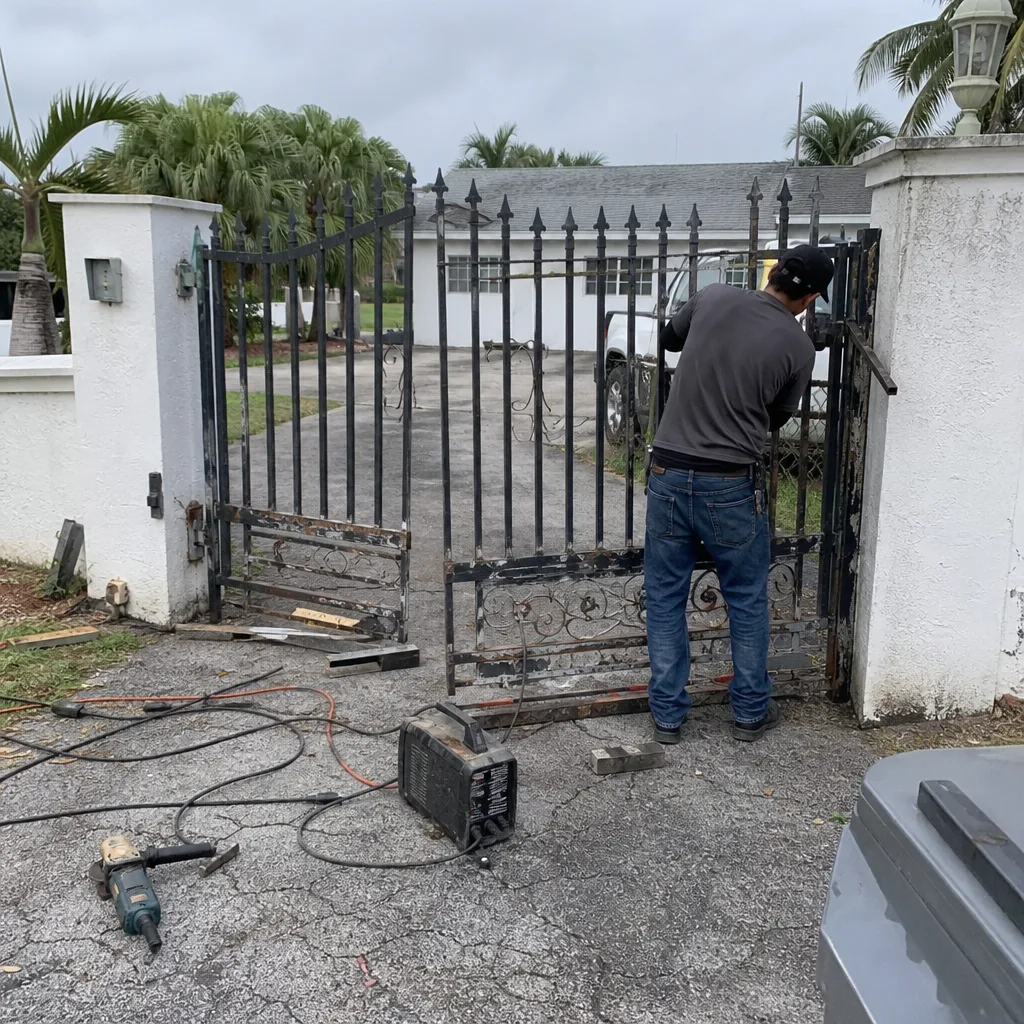 Before
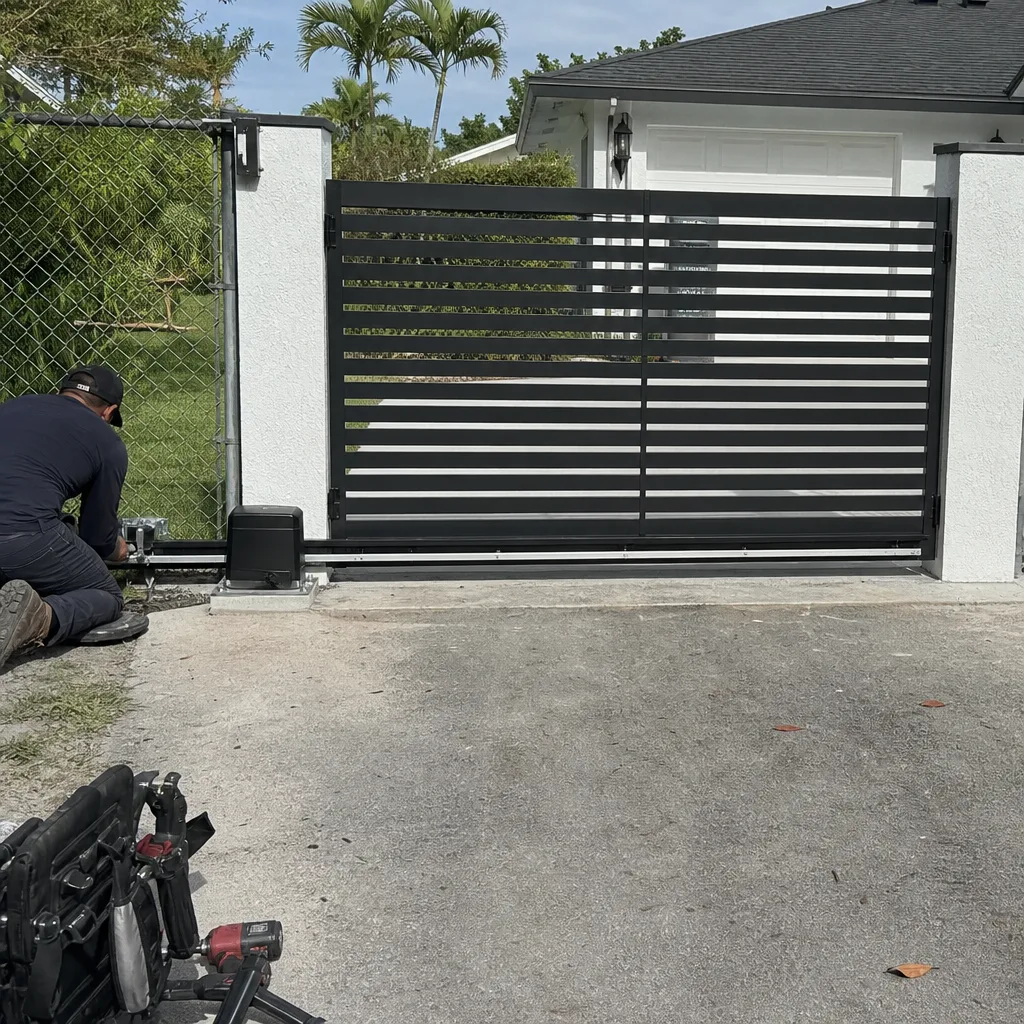 After
After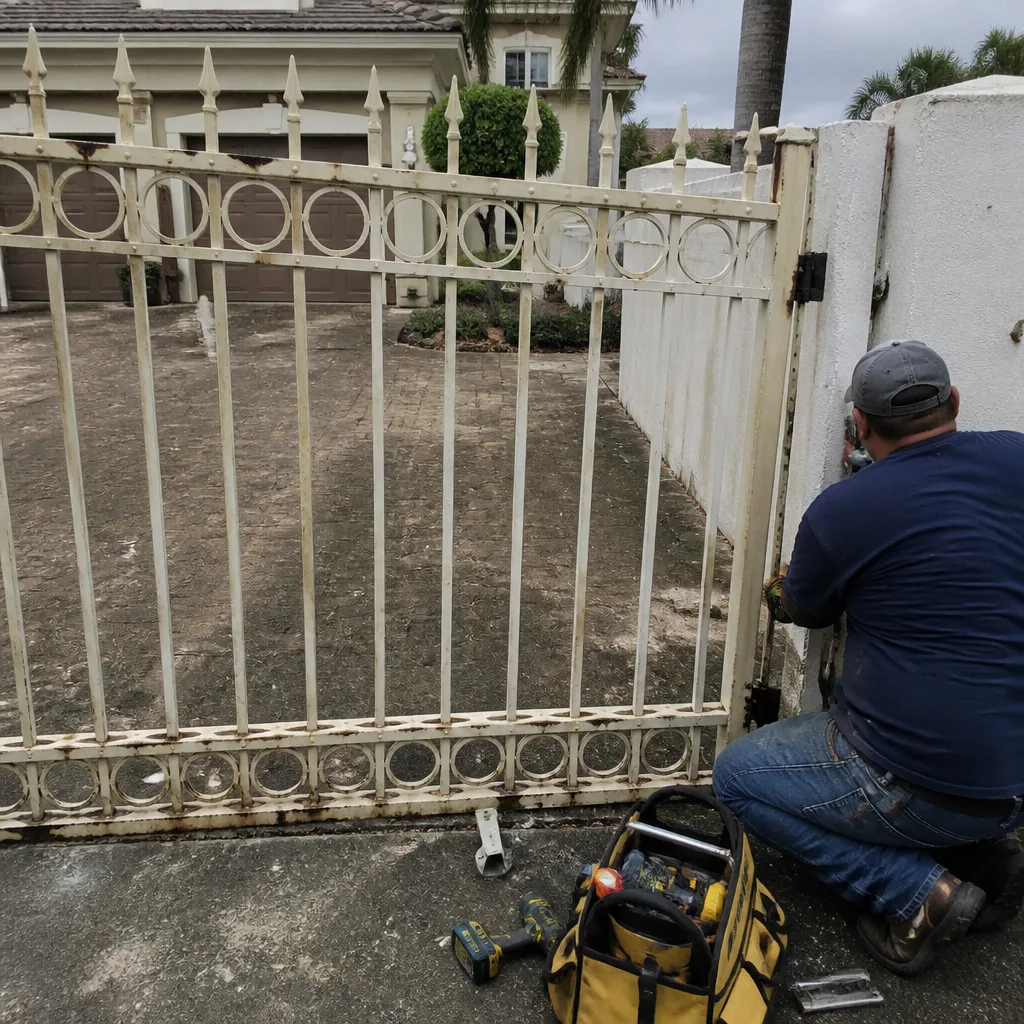 Before
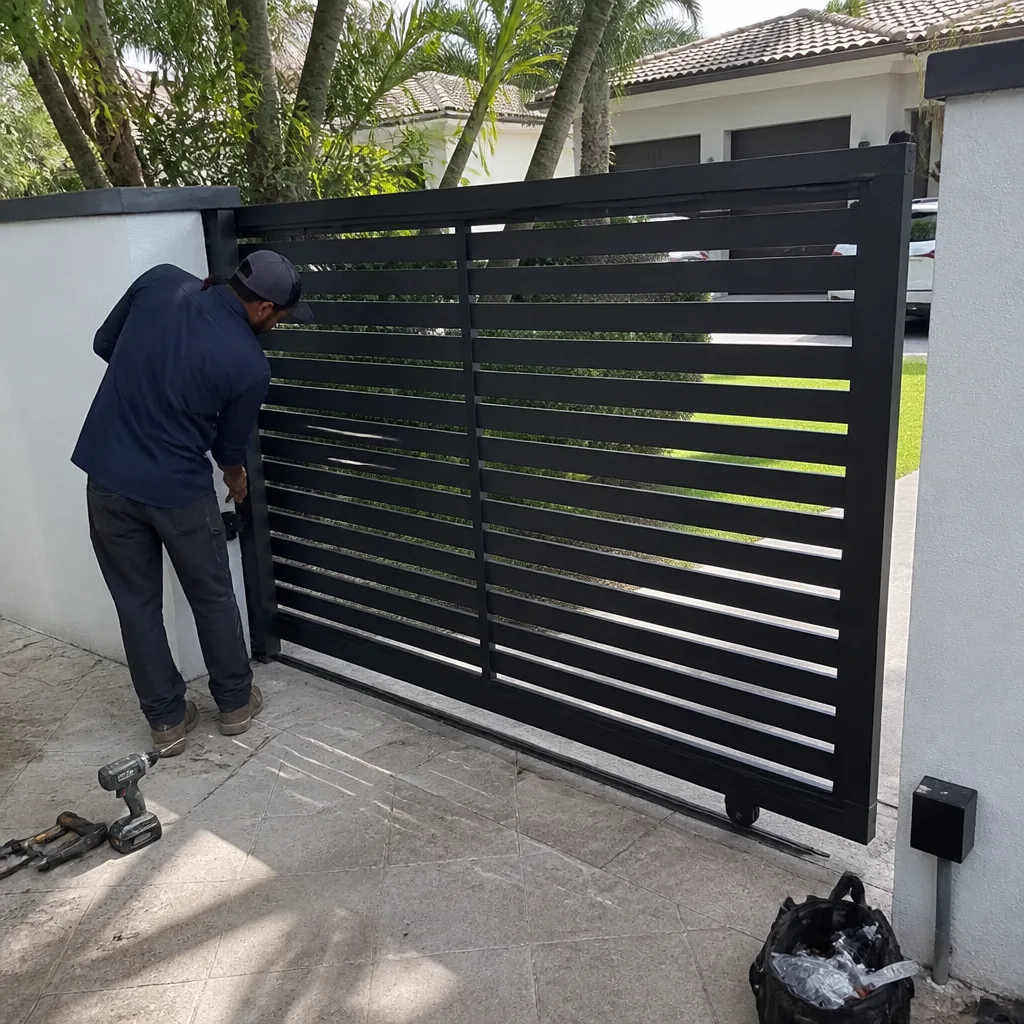 After
After