
Last updated October 16, 2026
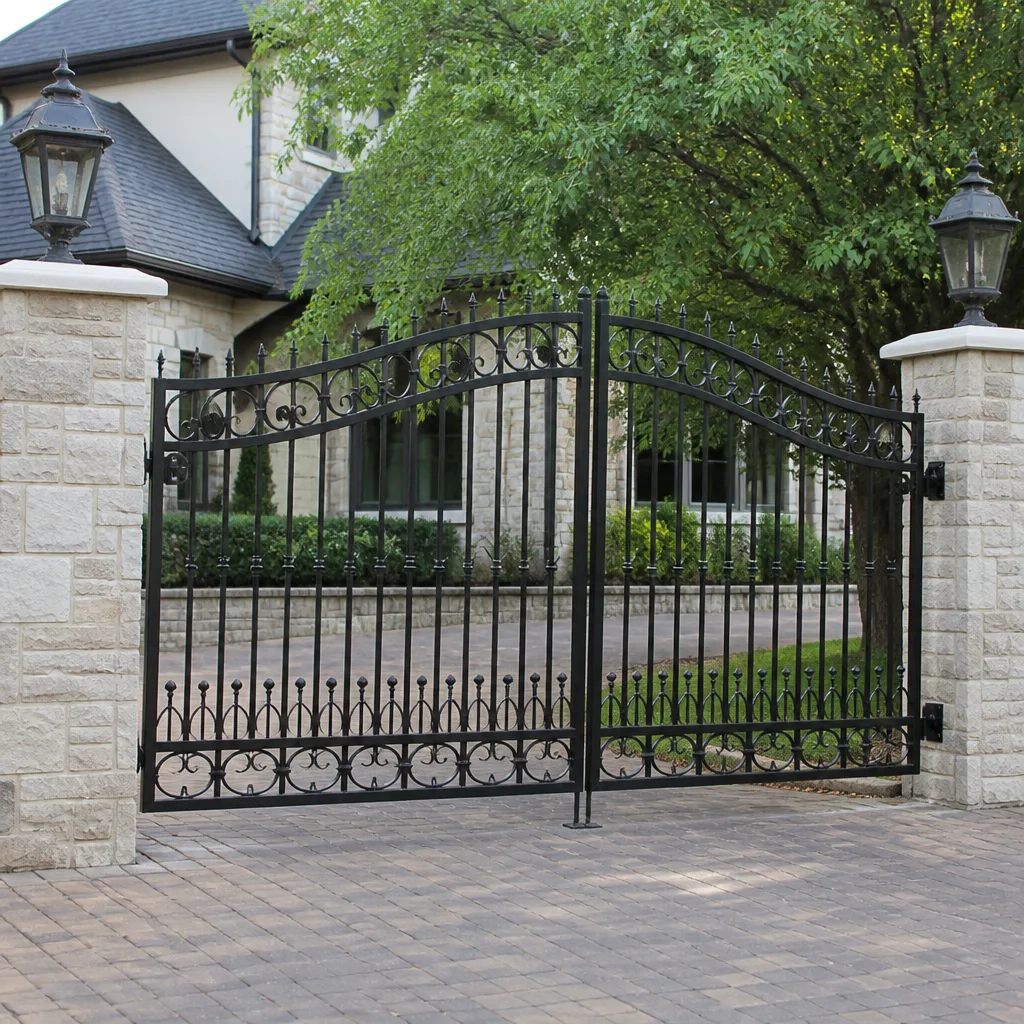 Wrought iron
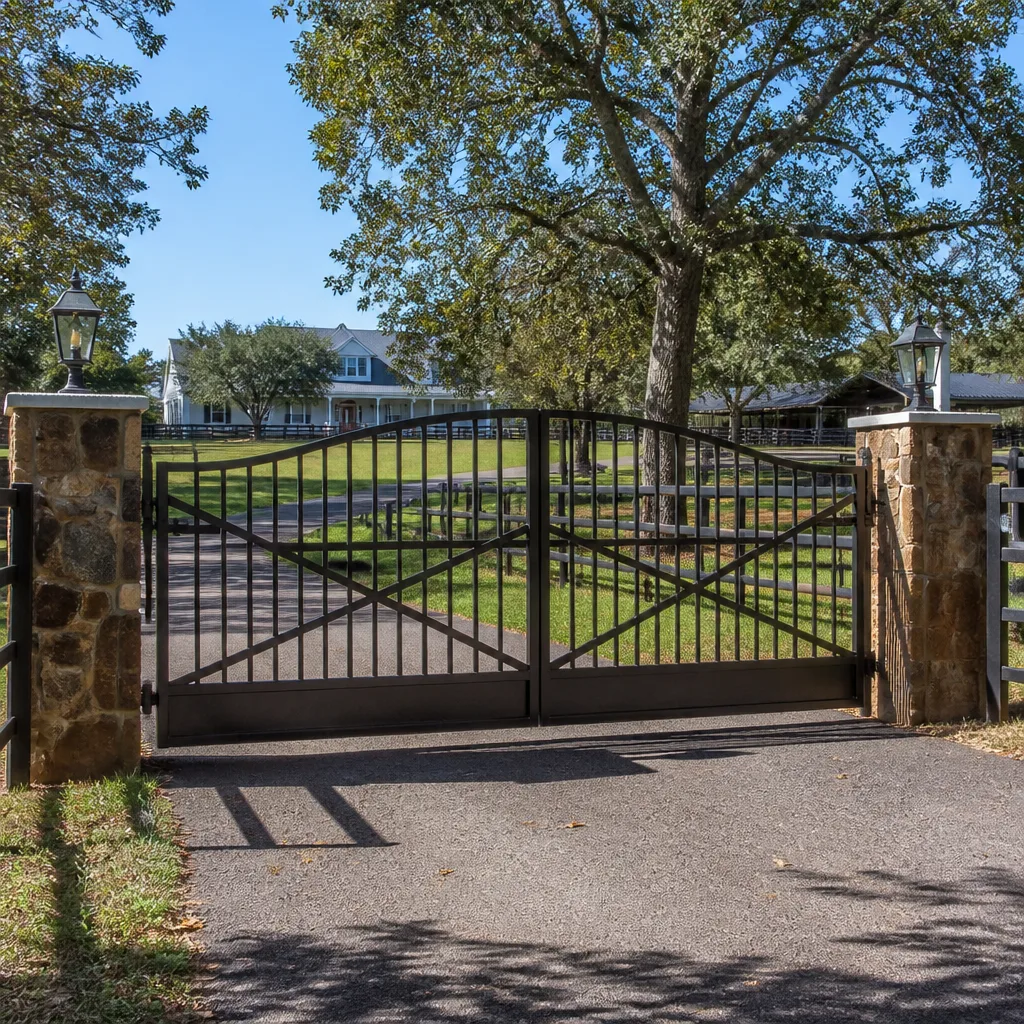 Farm & ranch
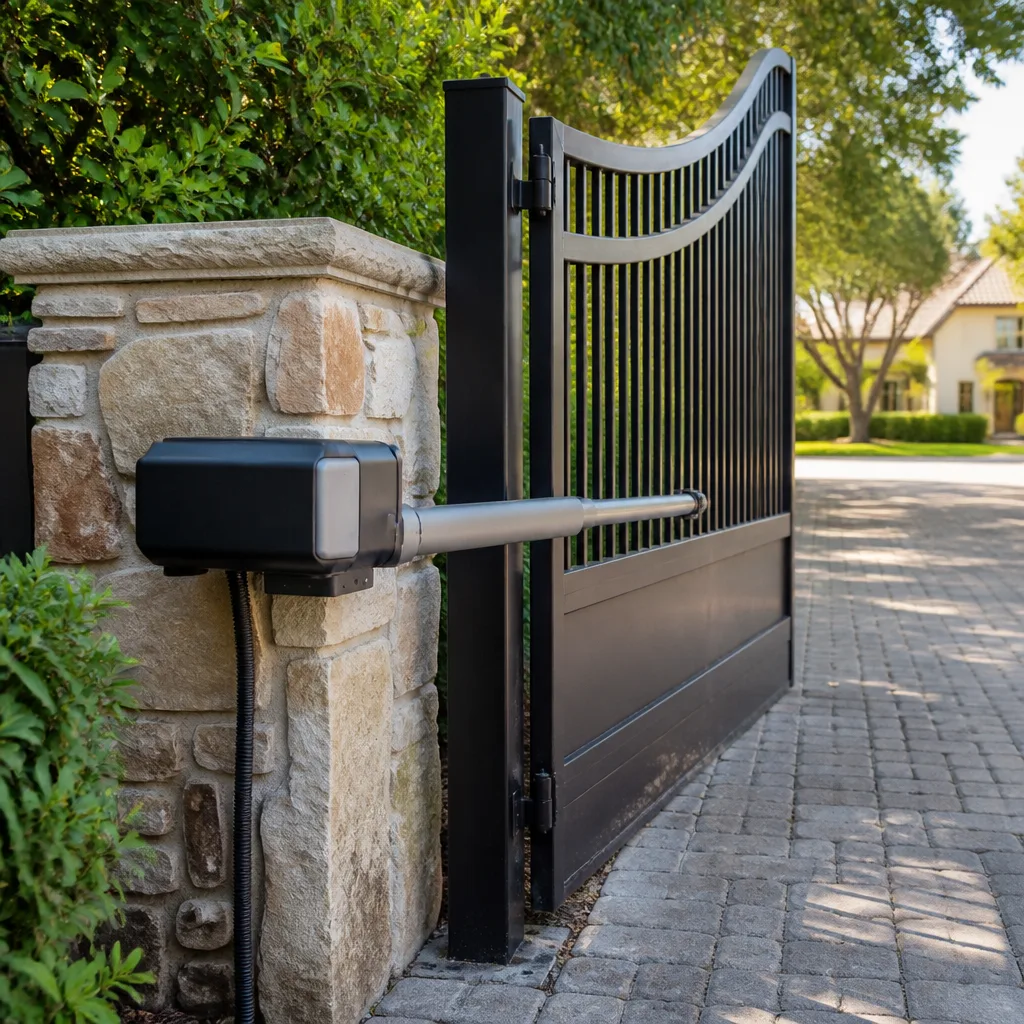 LiftMaster operators
Free on-site gate assessment - hinges, posts, and your LiftMaster or Nice gate operator checked before anything is quoted
The assessment is free and the quote is the invoice.
Get your free estimateDIY vs Professional Gate Repair: The Miami Homeowner’s Decision Guide
In 2023, a Miami Shores homeowner installed a new control board on his sliding gate opener. The board worked. The gate opened and closed. Eight months later, the gate’s safety reversal failed and the gate struck a visitor’s Lexus, causing $4,700 in damage. The homeowner filed an insurance claim. The claim was denied. The reason was buried in the policy’s exclusion language: the opener had been modified outside its UL listing, and the carrier classified the modification as negligent unpermitted work. The homeowner never saw it coming. This guide is about making sure you do.
Most DIY-vs-pro articles frame the decision around skill level. Can you turn a wrench? Can you follow a YouTube tutorial? That framing is wrong for Miami, and it’s wrong for gates. The real deciding factors are legal liability, insurance coverage, HOA compliance, and manufacturer warranty language. Capability matters, but consequences matter more. Here’s what you need to know before you touch a single bolt.
Quick Answer
DIY gate repair in Miami makes sense for a narrow set of tasks: lubrication, remote reprogramming, and minor hinge alignment. It does not make sense for opener wiring, control board replacement, safety sensor work, or anything involving 120V or 240V electrical connections. Those jobs carry legal liability, insurance voidance risk, and HOA compliance exposure that no amount of YouTube research removes. If the repair involves electricity, structural weight, or safety sensors, call a licensed Gate Repair professional and get the work documented.
Styles & brands we work with
Table of Contents
- What’s Actually Safe to DIY on a Miami Gate
- What Puts You at Legal and Insurance Risk
- Florida’s Electrical Work Rules and Your Gate Opener
- HOA Compliance: The Documented Pre-Approval Nobody Talks About
- Warranty Clauses That Die the Moment You Open the Enclosure
- The Honest Cost Comparison: DIY vs Pro in Miami
- Common Mistakes to Avoid
- When to Call a Professional
What’s Actually Safe to DIY on a Miami Gate
Let’s start with what you can legitimately do yourself without losing sleep. These tasks do not involve live electrical work, do not alter safety systems, and do not require tools beyond what most Miami homeowners already own.
Safe DIY tasks:
- Lubricating hinges, rollers, and chains. Use a white lithium grease or silicone spray. Do this every 4 – 6 months in Miami’s salt air. This is the single highest-value maintenance task you can do yourself.
- Reprogramming a remote or keypad code. If you have the original manual for your LiftMaster or Mighty Mule opener, this is a 5-minute job. No tools, no risk.
- Minor gate alignment adjustments. A sagging gate corner or a slightly sticky latch can often be corrected with a wrench and a level. If the gate is off its track by more than a quarter inch, stop and call someone.
- Cleaning solar panels on solar-powered openers. Miami’s humidity plus tree pollen creates a film that reduces panel output. Wipe them monthly with a damp cloth.
- Replacing remote batteries. This fixes roughly 30 percent of “my gate won’t open” complaints in our experience. Try this before calling anyone.
Notice what’s not on this list: anything involving the control board, the motor, the capacitor, the safety sensors (photo eyes), or the limit switch, which is the small sensor that tells the gate when to stop moving. Those components fail differently in Miami than they do in Phoenix or Chicago. Salt air corrodes contact points. Humidity causes solder joints to oxidize. Heat cycles crack plastic housings. A repair that looks straightforward on a YouTube video filmed in a dry garage in Dallas behaves differently on a Coral Gables driveway in August.
What Puts You at Legal and Insurance Risk
Here’s the part most DIY articles skip entirely. In Florida, if your gate injures someone or damages property, the question isn’t just “Did the repair work?” It’s “Who is liable, and what did the insurance policy say about the modification?”
Gates are legally classified as both motorized barriers and, when installed at a driveway entrance, as access control systems. That means they sit at the intersection of several overlapping legal frameworks:
- Premises liability law holds the property owner responsible for injuries caused by dangerous conditions on the property. A malfunctioning gate is a dangerous condition. If your DIY repair contributed to the malfunction, your defense gets much harder.
- Florida’s building code requires automatic gates to meet UL 325 safety standards, which mandate specific reversing mechanisms and safety sensors. Modifying these systems can take the gate out of compliance without you ever realizing it.
- Homeowner’s insurance policies almost universally exclude damage caused by unpermitted electrical work or negligent modification of a listed safety device. This is the clause the Miami Shores homeowner learned about after the fact.
We’ve seen this pattern repeat in Miami neighborhoods from Pinecrest to Kendall to Miami Lakes: a homeowner replaces a control board, the board works fine for months, then a safety sensor fails silently and the gate strikes a car or a person. The repair appeared successful. The liability was invisible. These are not rare freak occurrences. They are the predictable outcome of modifying equipment that is engineered to fail safe, not just fail closed.
UL 325 is the relevant standard. It exists specifically to ensure that when a gate opener fails, it fails in a way that does not crush someone. When you rewire a circuit, replace a board with a non-certified part, or bypass a sensor, you are removing the engineered failure behavior. You will not notice because the gate still opens and closes. The gate does not care. The insurance carrier will care, very much, if something goes wrong.
Florida’s Electrical Work Rules and Your Gate Opener
Florida has a specific carveout for what is sometimes called the “hobbyist exemption” in electrical work. This is where a lot of homeowners get confused about what is legal to touch.
What the hobbyist exemption covers: Florida statutes allow a homeowner to perform electrical work on their own primary residence without a state electrical contractor’s license, provided the work is done to code and is the homeowner’s own occupied dwelling. This covers things like replacing a light switch or installing a ceiling fan.
What the hobbyist exemption does not cover: The exemption thins out quickly when the work leaves the residential living space. Automatic gate openers are gray territory for a specific reason: they are motorized equipment governed by UL 325, and they are frequently connected to the residence’s feeder panel or to a dedicated circuit. When a homeowner modifies the gate opener’s high-voltage input connections, the work may still technically fall under the hobbyist exemption’s language. But the liability for doing it incorrectly transfers entirely to the homeowner.
The practical reality in Miami-Dade County is this: if an electrical inspection is triggered, by an insurance claim, an HOA complaint, or a buyer’s home inspection, unpermitted and non-code-compliant gate opener work becomes a problem. The county does not proactively inspect residential gate openers. But they do get pulled into disputes. And in those disputes, “I watched a video and it worked fine” is not a defense.
There’s a second electrical issue specific to Miami: surge damage from lightning storms. Miami’s storm season produces regular power surges that fry gate opener control boards. A DIY board replacement on a FAAC or BFT opener without a properly configured surge suppressor simply sets up the next failure. The board works for a month, then a storm rolls through and the board dies again. The homeowner assumes the board was defective. The real issue is that the surge protection was never installed correctly.
HOA Compliance: The Documented Pre-Approval Nobody Talks About
Miami has one of the highest concentrations of homeowner associations in the country. If you live in a gated community, or any community with a decorative entrance gate on your property, there’s a good chance your HOA has a specific set of rules about gate modifications and repairs.
Here’s what most homeowners don’t realize until it’s too late: the HOA’s rules apply to repairs, not just installations. Many Miami HOAs have architectural review language that requires written pre-approval for any modification to exterior structures, including automatic gates. Some community governing documents classify “repair” as a modification if the replacement part differs from the original specification.
A typical Miami HOA gate compliance process looks like this:
- Homeowner identifies a gate problem and schedules a repair.
- The HOA requires a written work description, sometimes with a parts list, submitted before the work starts.
- The architectural review committee approves or denies the request, usually within 14 – 30 days.
- If the work is done without approval, the HOA can levy fines, require reversal of the work, or place a lien on the property as a last resort.
This process applies to professional repairs too. But a professional repair shop provides the documentation the HOA wants: itemized parts, scope of work, and proof that the repair was done to code. A DIY job produces none of that. When an HOA asks for documentation and the homeowner says “I fixed it myself,” the result is frequently a fine and an order to have the work redone professionally.
We’ve seen this exact sequence in communities like Country Club of Miami and the Lakes area. The DIY repair was mechanically fine. The compliance failure cost more than the repair would have cost to hire out. Before you touch your gate, check your HOA’s governing documents. If there’s an architectural review clause, get the approval in writing first.
Warranty Clauses That Die the Moment You Open the Enclosure
Gate opener manufacturers are not subtle about this. Most major brands embed a clause in their warranty terms that voids coverage if the control enclosure is opened by anyone other than a certified technician or an authorized dealer.
LiftMaster is explicit: warranty coverage applies only to products installed and serviced by a professional dealer or qualified installer. A homeowner who opens the control board enclosure and replaces a component has voided the warranty for the entire opener, not just the replaced part. FAAC and BFT carry similar language in their North American warranty terms. Mighty Mule, the DIY-friendly brand, is more lenient on some product lines but still requires that repairs follow the included installation manual exactly, which few homeowners read in full.
What does this mean in dollars? A control board for a typical residential slide gate opener runs $200 – $600 depending on the brand and model. If the board fails under warranty and you’ve kept the enclosure sealed, the replacement is free. If you’ve opened the enclosure, the replacement is on you. The DIY “savings” disappear the first time a warrantied part fails and the manufacturer denies the claim.
One more layer: some Miami insurance carriers ask specifically about gate systems during underwriting and claims. If the opener’s warranty is voided by DIY work, and the gate later causes property damage, the carrier has an additional reason to deny the claim. It is not just about the warranty. It is about the paper trail that proves the equipment was maintained to manufacturer specifications.
The Honest Cost Comparison: DIY vs Pro in Miami
Let’s put real numbers on the table. Here’s what three common Miami gate repair scenarios actually cost, DIY versus professional, including the hidden costs that rarely make it into the YouTube tutorial. For a deeper dive, see our Gate Repair Cost Breakdown: The Miami Homeowner’s Reference for 2026.
Scenario 1: Gate opener won’t respond to remote
DIY: New remote batteries ($6). Reprogramming time (30 minutes). If the issue is actually the receiver board, the DIY attempt costs $6 and fixes nothing. True cost: $6 plus lost time plus the unresolved problem.
Professional: Diagnostic visit, typically $75 – $125 in Miami. If it’s just the remote, the fix is often done on the spot. If the receiver board is dead, the board plus labor runs $225 – $425. True cost: $75 – $425, with a written guarantee.
Scenario 2: Safety sensor (photo eye) failure
DIY: Replacement sensor pair ($45 – $90). Tools: none special. Risk: if the sensor is wired incorrectly, the gate may fail to reverse under obstruction. That’s the UL 325 violation. True cost: $45 – $90 plus liability exposure plus the real risk of a safety failure.
Professional: Sensor replacement plus alignment and safety system test. In Miami, this runs $150 – $275 including parts. The professional verifies the full reversal function, not just the sensor itself. True cost: $150 – $275 with a written guarantee that the safety system works.
Scenario 3: Control board replacement after a storm surge
DIY: Replacement board ($200 – $450 depending on brand – a LiftMaster board runs more than a Mighty Mule board). Surge suppressor if you know to install one ($40 – $80). Risk: board wiring errors, voided warranty, and no surge protection if the homeowner skips that step. True cost: $200 – $530 plus voided manufacturer warranty.
Professional: Board replacement plus surge suppressor installation plus system test. In Miami, $350 – $650 including parts. The professional’s warranty covers the board and the labor. The manufacturer’s warranty stays intact. True cost: $350 – $650 with the warranty chain preserved.
The pattern here is consistent. DIY saves 30 – 50 percent on the visible line items. The invisible costs, liability exposure, voided warranties, HOA fines, insurance claim denials, are the ones that make the “savings” disappear. You’re not buying parts and labor when you hire a professional. You’re buying a documented chain of responsibility.
For a full breakdown of what professional repair costs in the Miami market, see our page on Gate Repair in Miami. Every job includes a written price before any work starts, the 365-Day Done Right Promise in writing, and a free second visit if the repair fails within a year.
Common Mistakes to Avoid
- Bypassing the safety sensors instead of replacing them. This is the most dangerous DIY shortcut. The gate appears to work because the sensors are taped together and wired closed. The gate now has no reversing mechanism, which violates UL 325 and puts anyone near the gate at risk. Do not do this. Ever.
- Ignoring the HOA’s architectural review process. In Miami, more gate repair disputes are triggered by HOA documentation failures than by the actual quality of the work. Check the governing documents before you start.
- Replacing a control board without a surge suppressor. Miami’s storm season will kill the new board the same way it killed the old one. The surge suppressor is not optional in this market.
- Using non-UL-listed replacement parts from online marketplaces. The $30 sensor pair from an overseas seller has no UL listing, which means the entire gate system is now out of compliance. If the gate causes an injury, the insurance carrier will find that part in the email receipt.
- Adjusting the opening or closing force settings to “fix” a dragging gate. Increasing force masks the underlying problem (usually worn rollers or a misaligned track) and makes the gate more dangerous. The correct fix is mechanical, not electronic.
- Assuming the hobbyist electrical exemption covers all gate wiring. The legal gray area is real, and in Miami-Dade, it tilts against the homeowner when a claim or dispute arises. When in doubt, hire a licensed professional.
When to Call a Professional
Call a professional when the repair involves any of the following: the gate opener’s control board, the motor or capacitor, the safety sensors or photo eyes, the limit switch, any 120V or 240V wiring, any structural component of the gate itself, or any scenario where the gate is striking objects, reversing unexpectedly, or moving too fast. These are the systems that create liability when they fail. They are also the systems where a documented professional repair protects you under insurance and HOA rules.
Calder Gate Repair Miami offers free estimates across Miami – call (850) 821-3781 to schedule a diagnostic visit. We’re trained across nine major gate opener brands including LiftMaster, FAAC, BFT, and Mighty Mule, and every repair includes a written price before work starts. For more on our services, see Electric Gate Repair in Miami or Gate Opener Repair in Miami.
See the difference
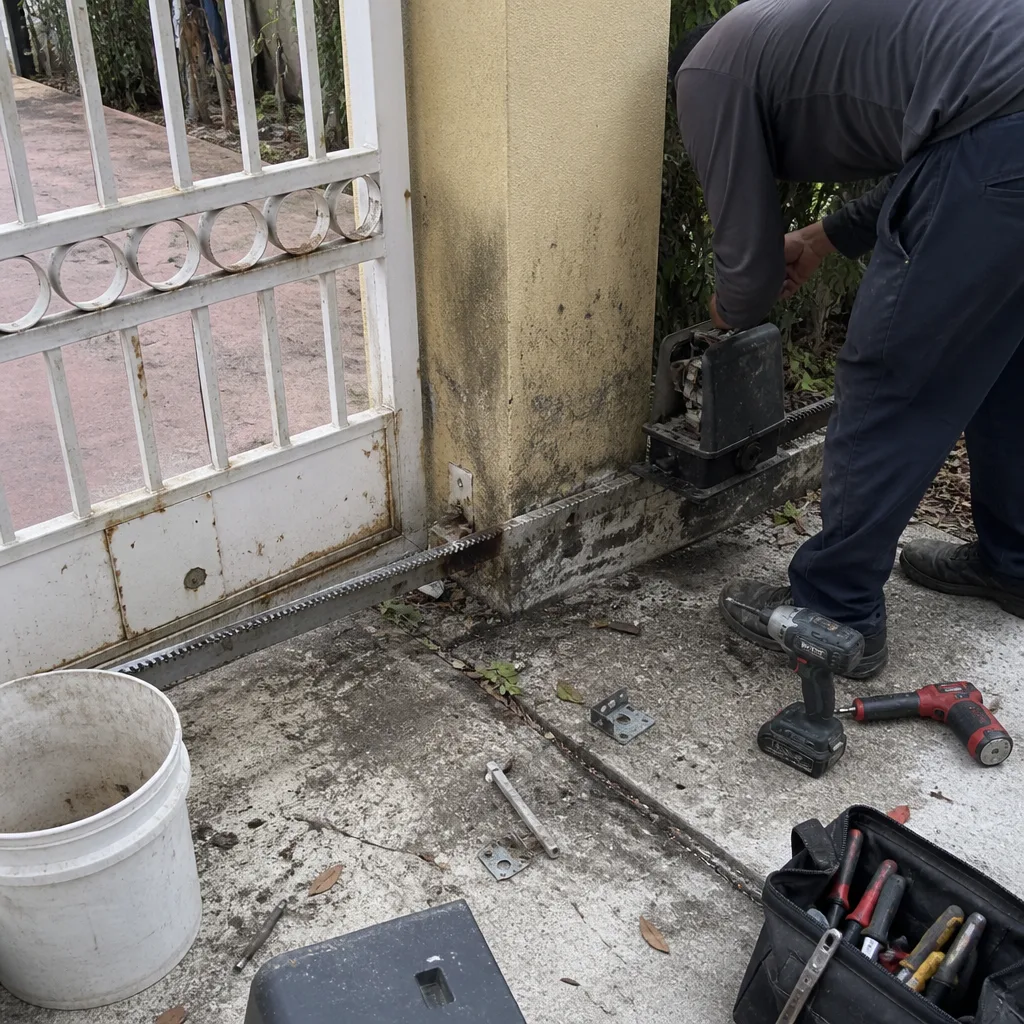 Before
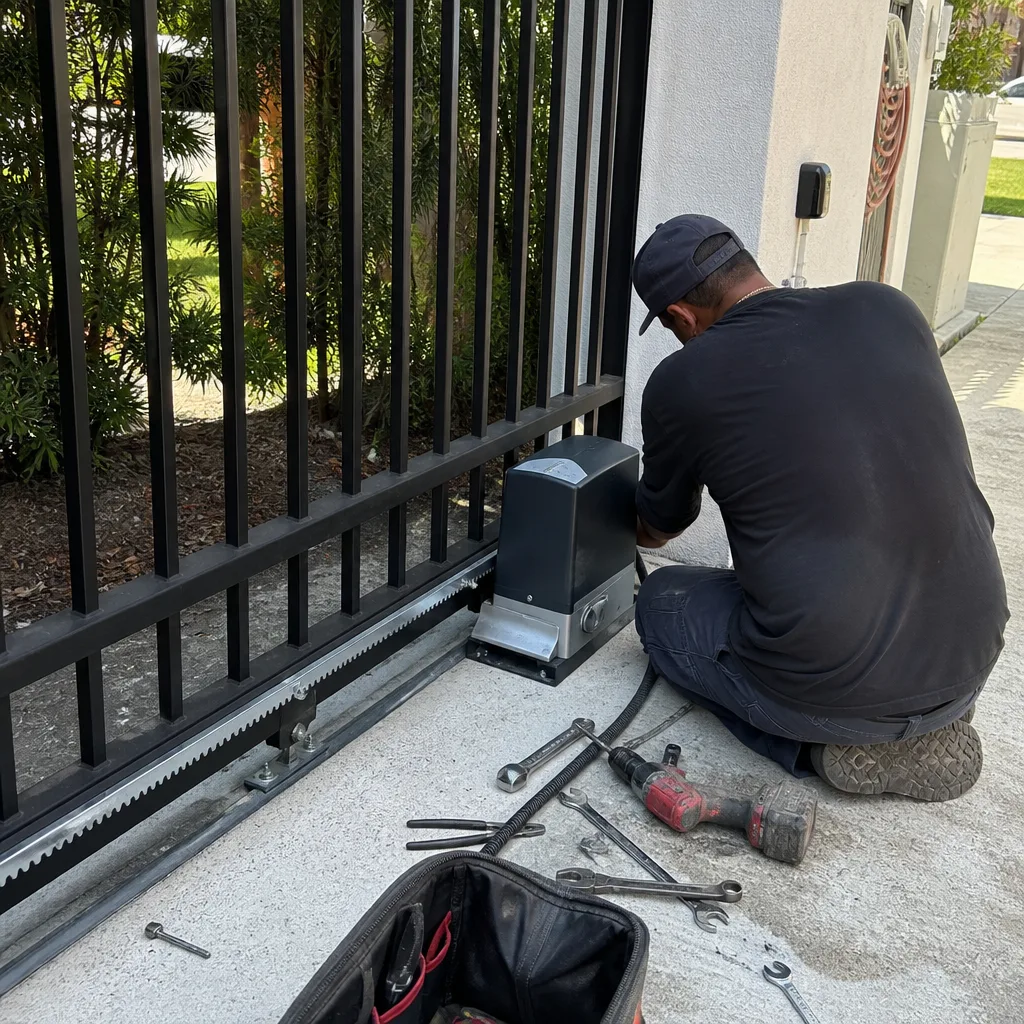 After
After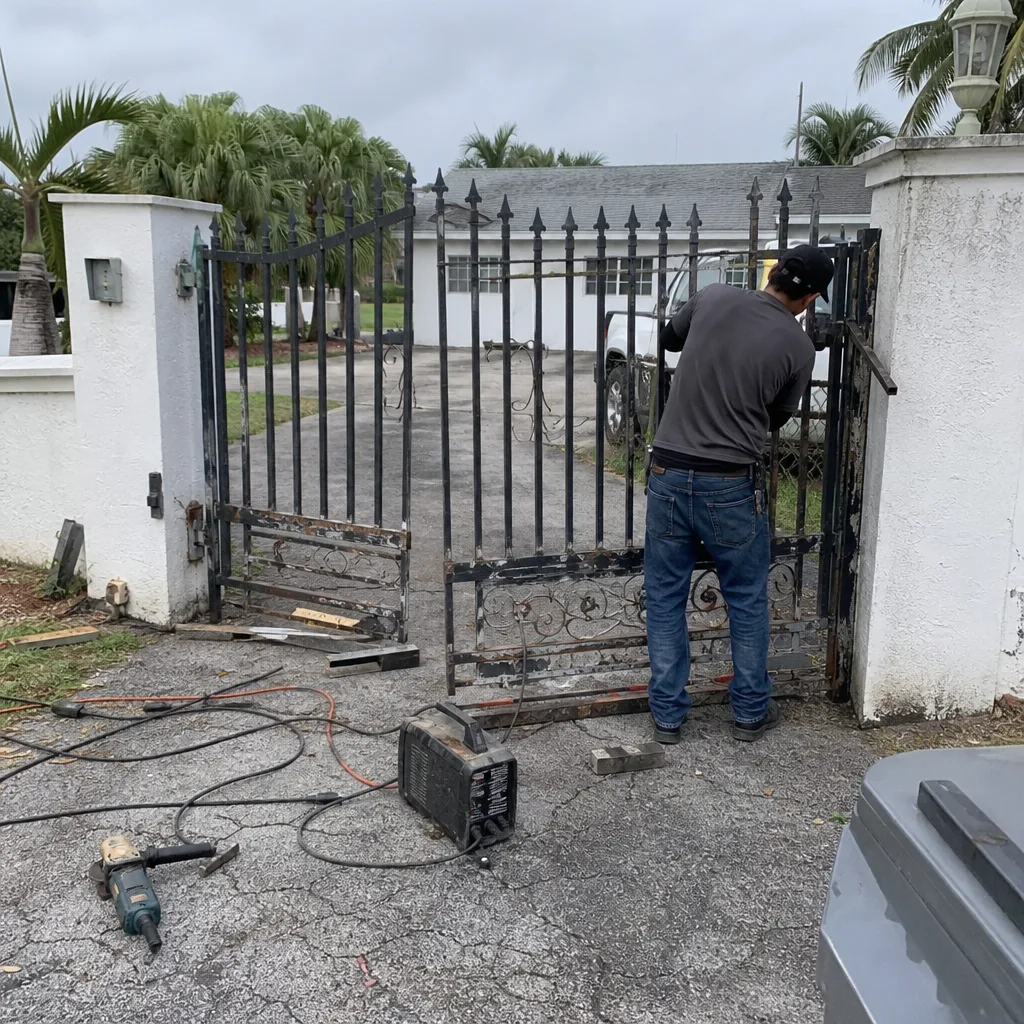 Before
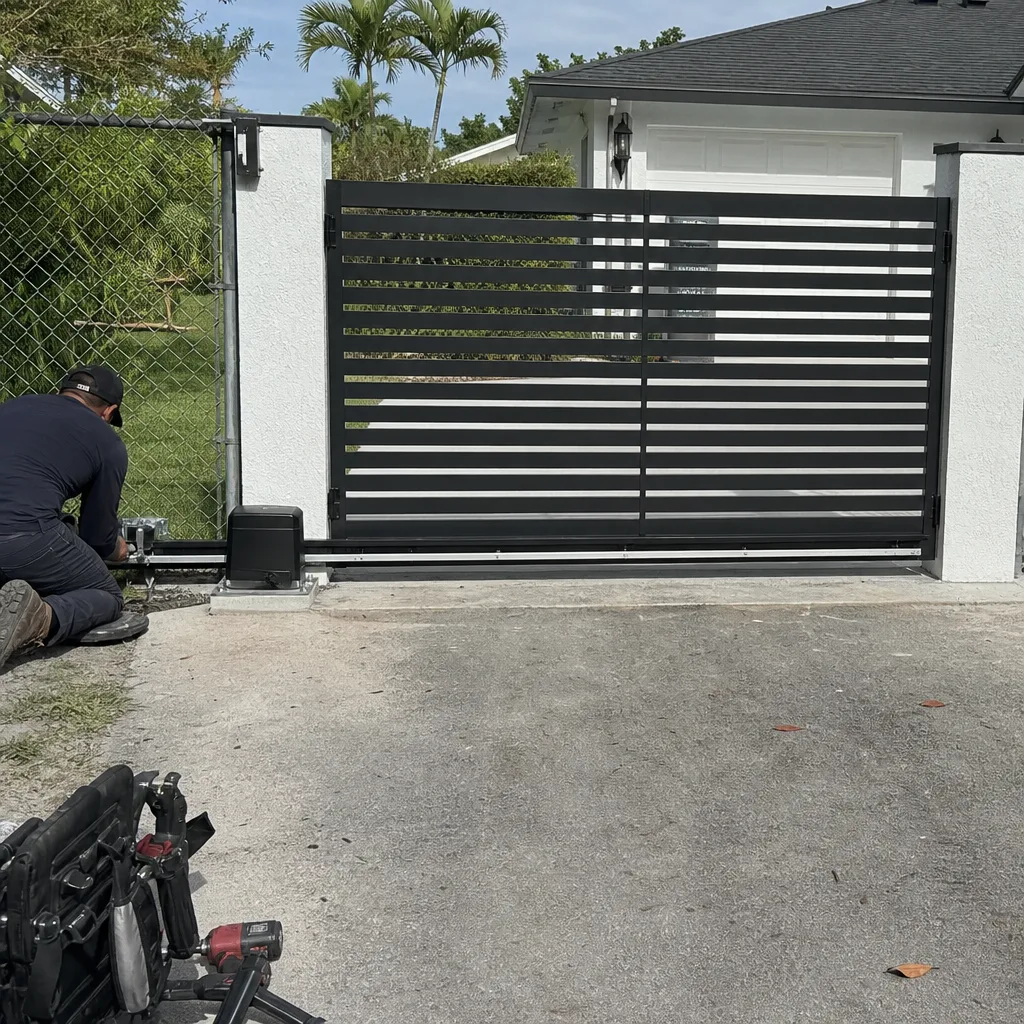 After
After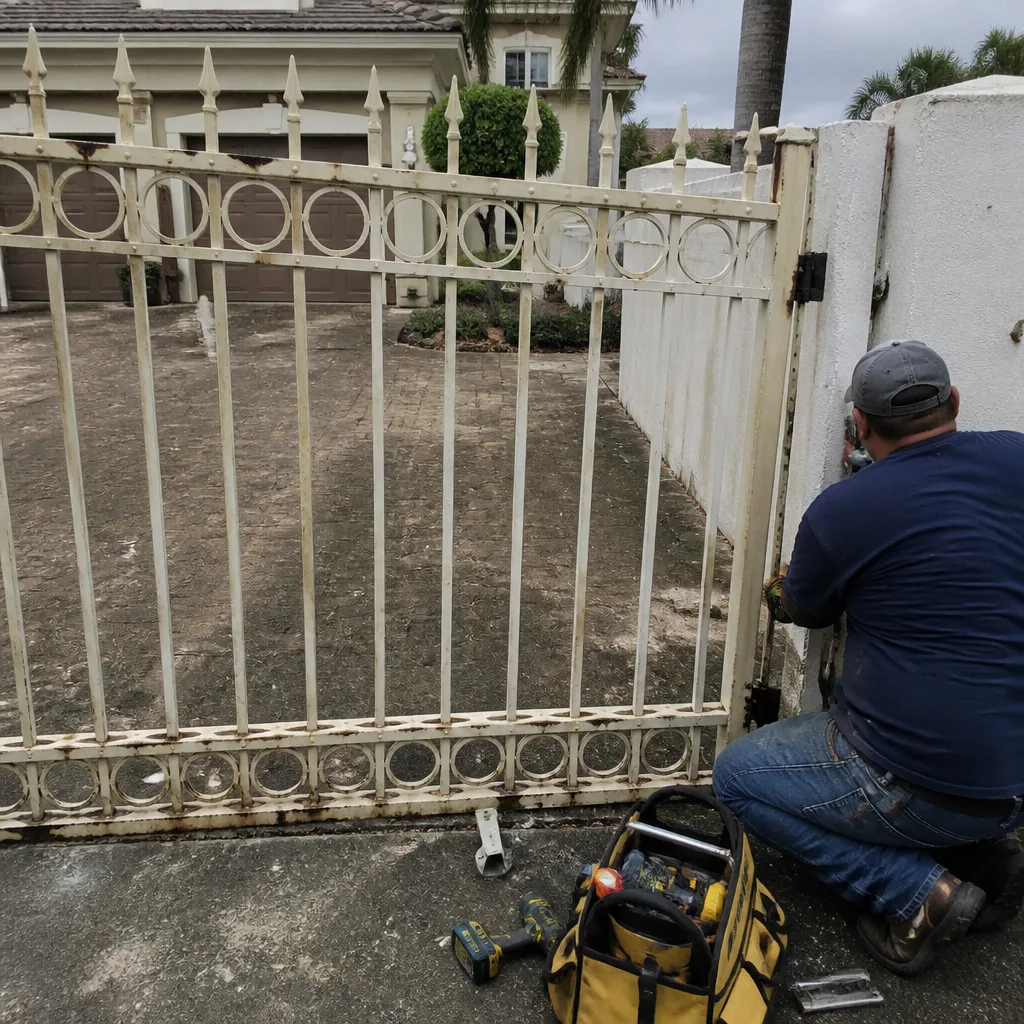 Before
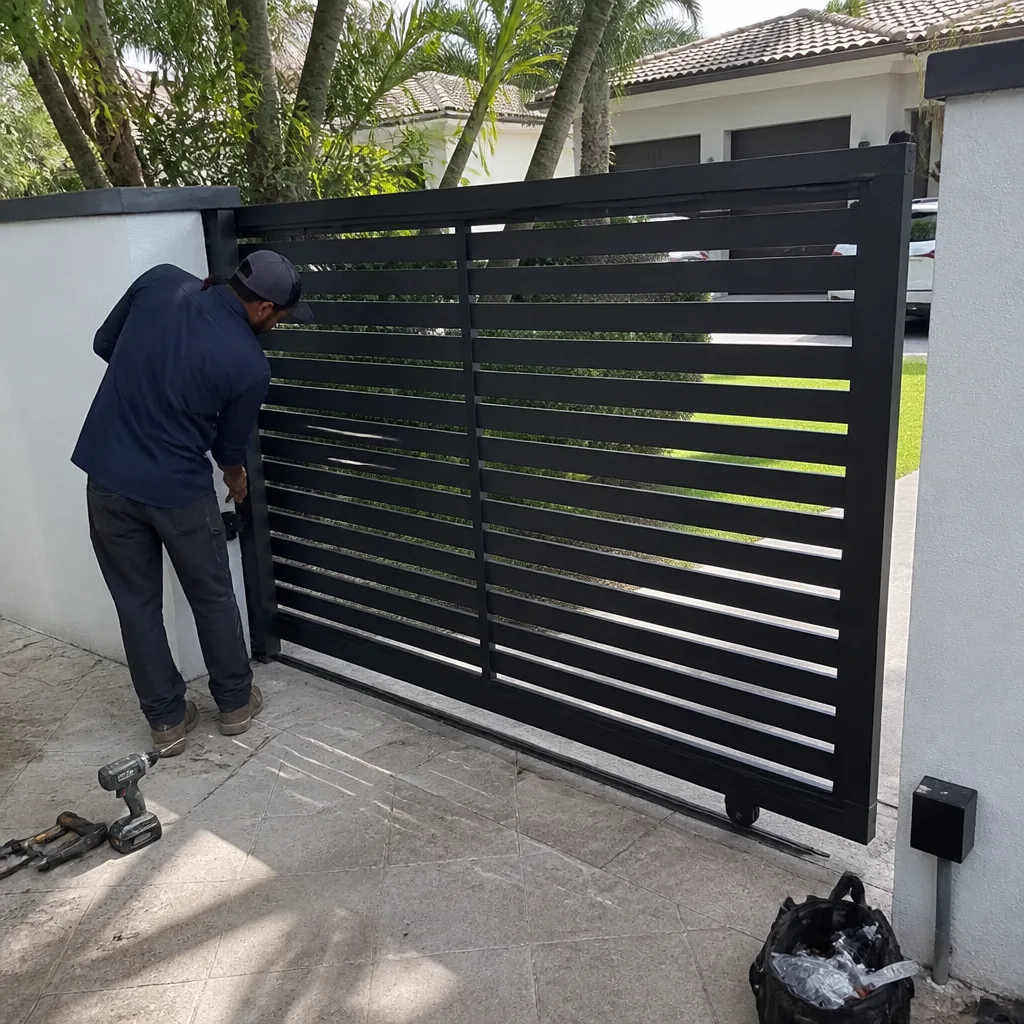 After
AfterFrequently Asked Questions
Most gate opener repairs in Miami run $150 – $650 depending on the component and the brand. A simple sensor replacement might cost $150 – $275; a control board replacement on a LiftMaster or FAAC opener typically runs $350 – $650 including the board and a surge suppressor. Every Calder Gate Repair Miami job includes a written price before any work starts, so you know the number before a single bolt is turned. Call (850) 821-3781 for an exact quote.
You can perform basic maintenance yourself, including lubrication, remote reprogramming, and minor alignment adjustments. For a complete list, see our Gate Repair Maintenance Checklist for Miami Homeowners. You should not attempt any repair involving the control board, motor, safety sensors, or electrical wiring. Those repairs carry legal liability and insurance exclusion exposure that DIY maintenance does not. When a safety system is involved, hire a professional and keep the documentation.
In our experience across Miami, LiftMaster and FAAC hold up best to heat, humidity, and salt air when properly installed with surge protection. BFT is also common in Miami’s residential slide gate installs. The brand matters less than the installation quality, particularly the surge suppression and enclosure sealing. A poorly installed premium opener fails faster than a properly installed budget opener.
Most Miami homeowners policies cover gate damage from covered perils like lightning or falling trees, subject to the deductible. The exclusion risk comes from DIY modifications: if a gate causes injury or property damage and the opener was modified outside its manufacturer specifications, the carrier may deny the claim. Documented professional repairs protect your coverage.
Many Miami HOAs require written pre-approval for any modification to exterior structures, including automatic gates. Some governing documents classify repairs as modifications if replacement parts differ from the original specification. Check your HOA’s architectural review language before starting any gate work, and keep written documentation of the repair for your records.
The 365-Day Done Right Promise is Calder Gate Repair Miami’s written guarantee on every repair: if the repair fails within 365 days, we return and make it right at no charge. This includes a free second visit if the repair fails, automatically included with every job. It’s stated in writing on every invoice, not verbalized and forgotten. Call (850) 821-3781 for details.
The Bottom Line
The DIY-vs-pro decision for gate repair in Miami is not about whether you can do the work. It’s about what happens when the work fails. A gate opener is a motorized safety system governed by UL 325, HOA governing documents, Florida’s electrical code, and your insurance policy’s fine print. The tasks that are safe to DIY are simple and narrow. The tasks that are not safe to DIY carry consequences that extend years beyond the repair itself. When the repair involves electricity, safety sensors, or anything inside the control enclosure, the smart choice is a professional with documentation and a written guarantee. Start at Calder Gate Repair Miami home for our full service overview.
Written by Nico Alvarez, Owner at Calder Gate Repair Miami, serving Miami since 2009. Explore our more guides & resources.