
Last updated October 16, 2026
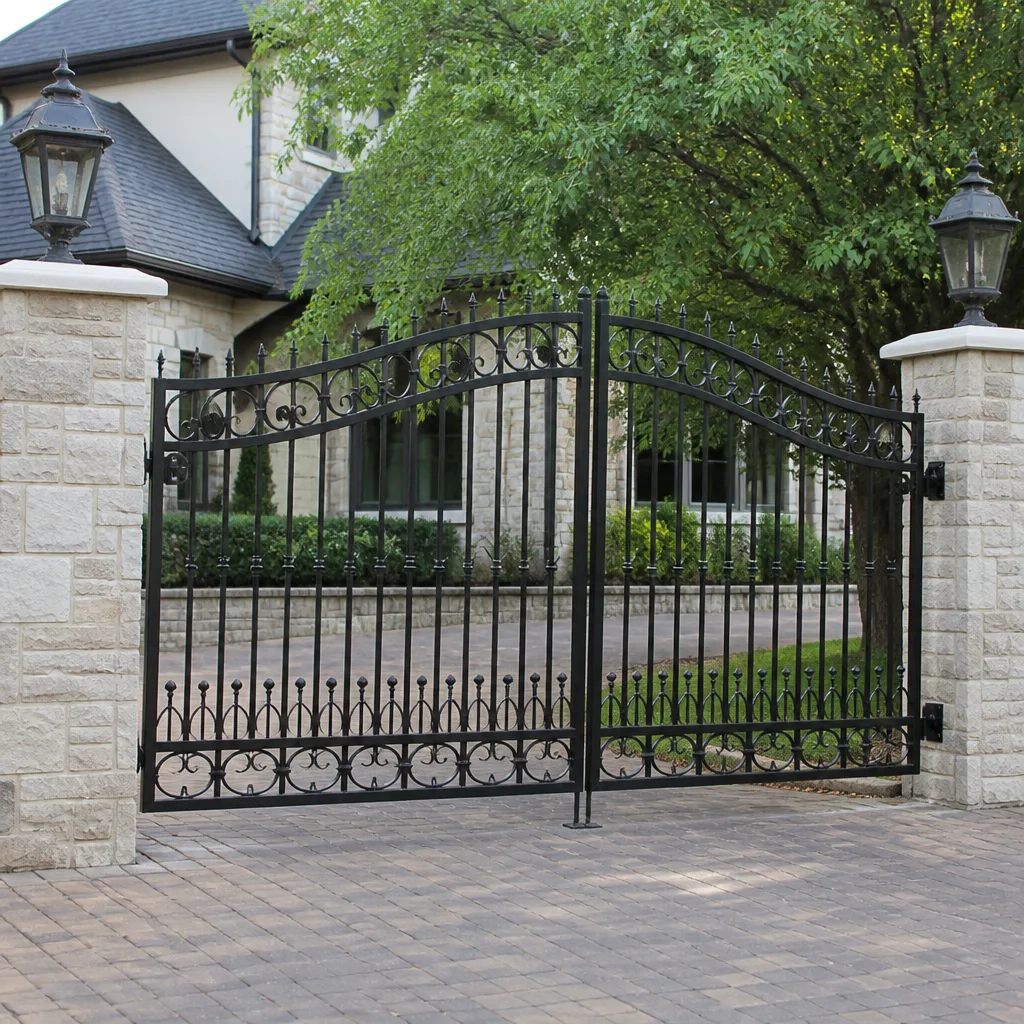 Wrought iron
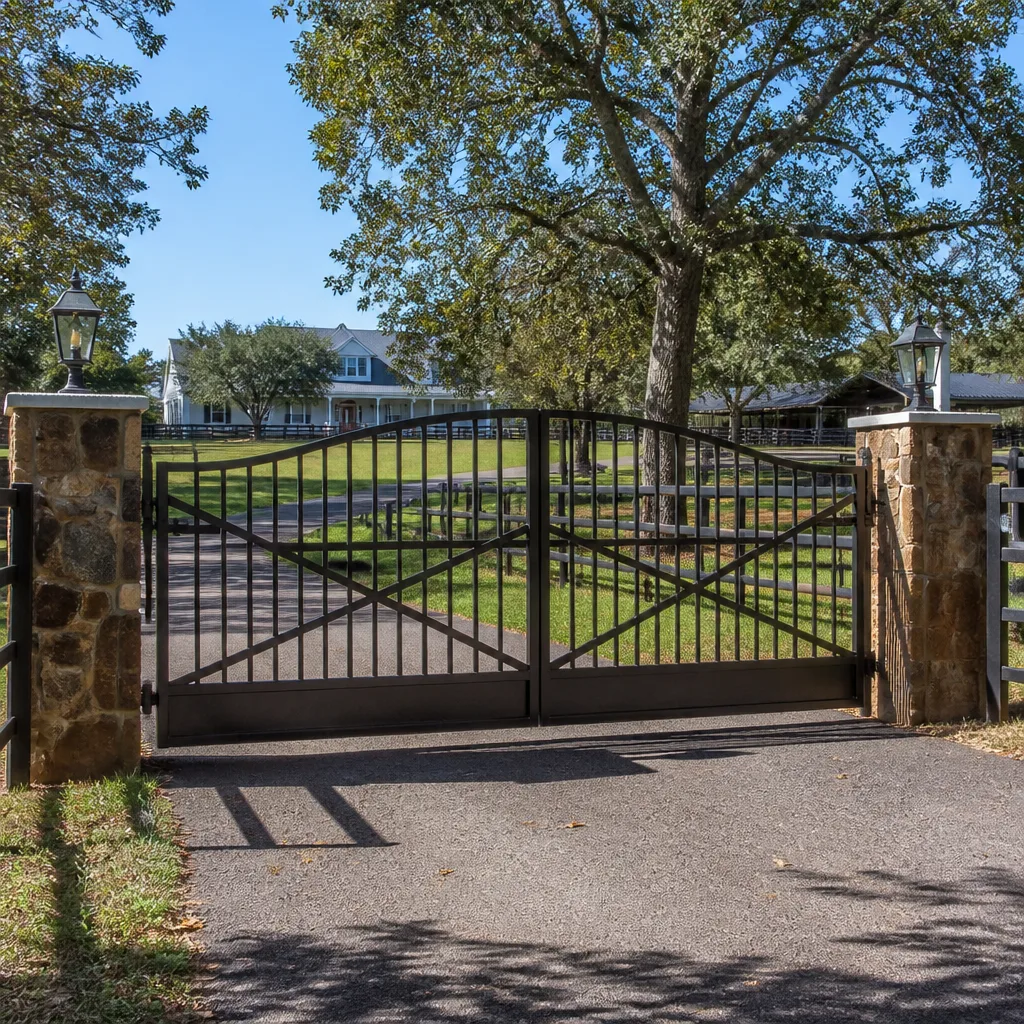 Farm & ranch
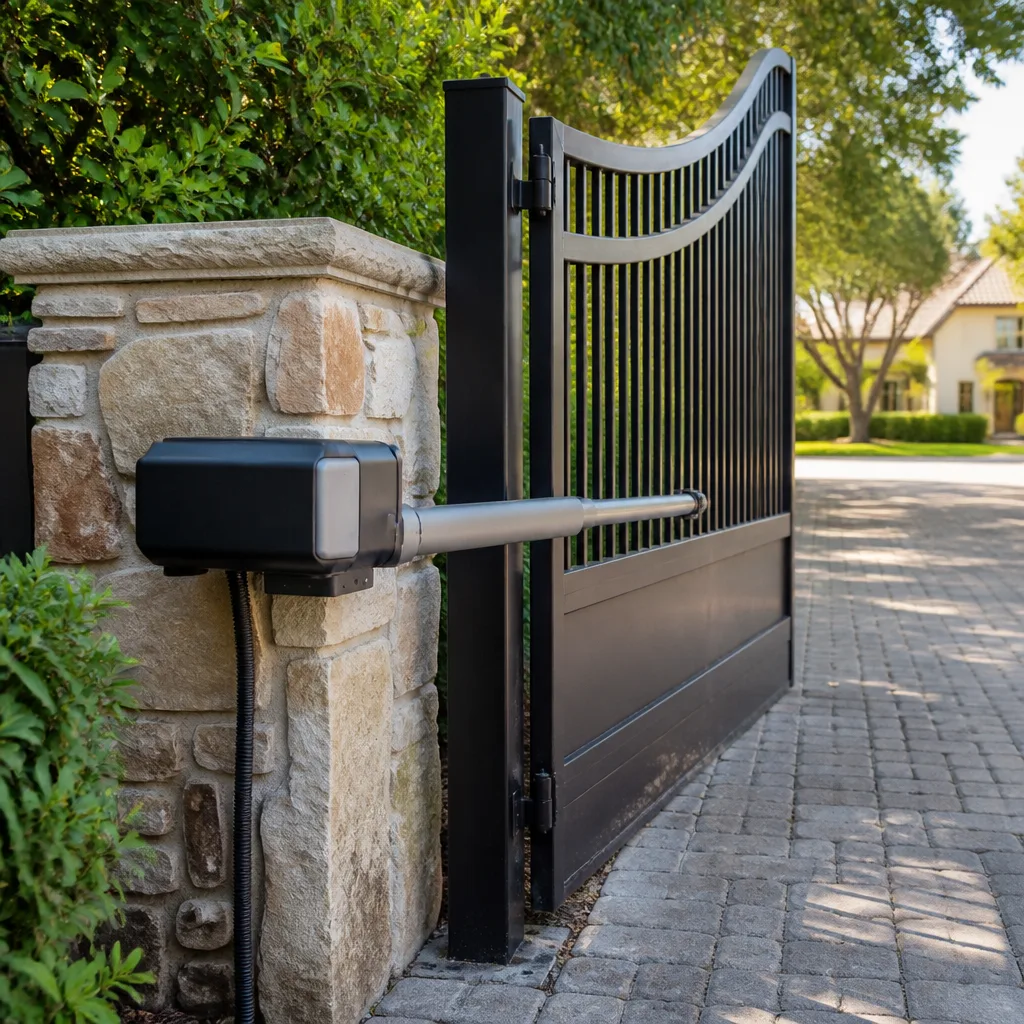 LiftMaster operators
Free on-site gate assessment - hinges, posts, and your LiftMaster or Nice gate operator checked before anything is quoted
The assessment is free and the quote is the invoice.
Get your free estimateThe Complete Guide to Gate Repair in Miami
Miami’s average relative humidity sits above 75% year-round, which means the lifespan estimates printed on most gate opener boxes were written for a city that isn’t yours. A gate that would run trouble-free for a decade in Phoenix or Denver can start corroding, sticking, and failing within three to four years here. This guide maps every failure mode, opener brand pattern, and local regulatory quirk specific to Miami addresses. We’ll cover what actually breaks, what it costs, how HOA rules and Miami-Dade permit triggers change the repair process, and when a repair is smarter than a replacement.
Quick Answer
Gate repair in Miami typically costs $150 to $850 depending on whether you’re dealing with a mechanical issue, an electrical fault, or a full opener replacement. Most repairs take one to three hours, but salt-corrosion damage and HOA approval requirements can extend that timeline. Calder Gate Repair Miami provides Gate Repair services with a written price before any work starts and backs every repair with our 365-Day Done Right Promise.
Styles & brands we work with
Table of Contents
- Why Miami Weather Destroys Gates Faster Than Anywhere Else
- Gate Anatomy 101: The Parts That Actually Break
- Brand-Specific Failure Patterns in South Florida
- What Gate Repair Costs in Miami, by Problem Type
- The HOA and Permit Layer: What Miami Homeowners Must Know
- Repair vs. Replace: The Miami Math
- What the Relay Visibility Guarantee Means in Practice
- What You Can Safely Check Yourself (and What You Shouldn’t Touch)
Why Miami Weather Destroys Gates Faster Than Anywhere Else
Salt is the silent killer of gate hardware. In Miami Beach, Brickell, and Key Biscayne, airborne salt rides in on ocean breeze and settles on every exposed metal surface. Combine that with humidity that rarely dips below 70%, and you get a corrosive cocktail that eats through zinc-plated hinges, rusts gate tracks, and corrodes electrical contacts inside opener control boards.
What surprises most homeowners is how differently corrosion behaves across Miami’s ZIP codes. Coastal neighborhoods like Miami Beach and Coconut Grove see aggressive, year-round salt exposure. Inland areas like Doral and Kendall face less salt but more intense heat during summer afternoons, which causes plastic gears and capacitor housings to crack and warp. Homestead and Florida City sit in a unique microclimate where agricultural irrigation raises ambient moisture even in dry season, keeping gates damp for weeks at a time.
We regularly see gates in Brickell fail from corroded limit switches – the small sensors that tell the gate when to stop. In Homestead, it’s more often a failure of the gate’s capacitor from sustained moisture inside the control box. These are not the failures that a generic national guide would predict, because those guides aren’t written from inside the Miami repair market.
For a deeper dive into how Miami specifically affects gate operation, see our Gate Repair in Miami breakdown.
Gate Anatomy 101: The Parts That Actually Break
Before you can diagnose a problem, it helps to know what you’re looking at. A residential gate has three connected systems: the physical gate structure, the opener mechanism, and the electrical and control system. When one fails, it often stresses the other two.
Here are the components we replace or repair most often in Miami:
- Gate opener motor: The workhorse that physically moves the gate. In Miami humidity, motor windings corrode and bearings seize far earlier than manufacturer timelines suggest.
- Control board: The brain inside the opener housing. Salt air creeps into the enclosure and corrodes circuit traces. Symptoms: gate opens but won’t close, or opener responds intermittently.
- Limit switches: Small mechanical or magnetic switches that tell the gate when to stop at fully open or fully closed. When they drift or corrode, the gate slams, reverses mid-cycle, or refuses to move.
- Capacitors: These give the motor its starting jolt. In South Florida heat, capacitors bulge and fail, leaving you with a humming opener that doesn’t move the gate.
- Hinges and rollers: The mechanical wear points. Salt corrosion grinds these down, making the gate heavy and slow – which in turn burns out the opener motor.
- Safety sensors and photo eyes: Required by Miami-Dade building codes for any automatic gate. When misaligned or dirty, the gate reverses or refuses to close.
- Keypad and remote receivers: Often the first thing to fail after a lightning strike or power surge, both common in Miami’s summer thunderstorm season.
Understanding what’s broken is the first step. Our Electric Gate Repair in Miami page explains how we diagnose each system.
Brand-Specific Failure Patterns in South Florida
Every gate opener brand has its own weakness, and Miami’s climate amplifies certain ones. Calder Gate Repair is factory-familiar with nine major brands including LiftMaster, FAAC, BFT, Linear, Viking, Ghost Controls, DoorKing, Elite, and Mighty Mule. We see which ones thrive here and which ones struggle.
Why FAAC and BFT Dominate Miami’s Upscale Market
FAAC and BFT are Italian brands, and they dominate gated communities in Coral Gables, Pinecrest, and Palmetto Bay. These are hydraulic and electromechanical openers built for heavy decorative gates. The good news: their core mechanics are robust. The bad news: their control boards are sensitive to humidity, and parts have to be ordered more often than not. In our experience, a FAAC repair often means a board replacement, and a board replacement can take days if the part isn’t stocked locally. We stock common FAAC and BFT parts specifically because Miami’s installer base uses so many of them.
Linear and Viking: Workhorses That Rust
Linear and Viking are common in mid-range Miami homes. These are chain-driven or belt-driven slide gate operators that handle daily use well. The issue in Miami is the chassis. We’ve opened more rusty Linear housings than any other brand, particularly in homes within three miles of the coast. Once moisture gets inside the housing, the control board follows. A rusty Linear isn’t immediately dead, but corrosion accelerates every electrical component inside.
The Brand-Neutral Reality
What matters most is not the brand name on the housing, but whether the unit was spec’d for coastal exposure and installed with sealed conduit and gasket protection. Too many Miami gates are built with inland-grade hardware because the original installer didn’t account for salt.
If your opener is acting up and you’re not sure what brand it is, our Gate Opener Repair in Miami page walks through how to identify your unit and what the likely repair path looks like.
What Gate Repair Costs in Miami, by Problem Type
One of the most common questions we get is “How much is this going to cost me?” Here’s the straight answer, in real Miami numbers, with our Gate Repair Cost Breakdown: The Miami Homeowner’s Reference for 2026.
Most gate opener repairs in Miami run $150 to $450 before parts. If a major component like a control board or motor needs replacement, the total including parts typically lands between $400 and $850. Full opener replacement, including labor, runs $900 to $2,200 depending on the brand and whether the gate is a slide or swing type.
- Limit switch replacement: $120 – $200. Usually done within an hour. One of the most common repairs in Miami.
- Capacitor replacement: $90 – $180. Fast fix. Often mistaken for a dead motor.
- Control board replacement: $250 – $600 including part. Brand-dependent. FAAC and BFT boards trend higher.
- Hinge and roller repair: $150 – $350. Mechanical labor. Critical to do early, because a heavy, dragging gate burns out the opener.
- Motor replacement: $400 – $850 including part. We always quote the motor and installation as a single line item so there’s no surprise.
- Full opener replacement (slide or swing): $900 – $2,200 depending on brand, gate weight, and whether new safety sensors are required.
- Keypad and receiver replacement: $150 – $400. Common in Miami after summer lightning strikes.
Every Calder Gate Repair job starts with a written price before any work starts. That means the number on the invoice is the number agreed to at the door, never a surprise add-on. You approve the price, we do the work, and the invoice matches. That’s the deal.
The HOA and Permit Layer: What Miami Homeowners Must Know
Here’s the part that generic gate repair guides miss entirely: in Miami, the gate itself is often not fully yours to repair without asking first.
Many Miami neighborhoods, from gated communities in Aventura to older HOA-run developments in Kendall, have architectural review committees that must sign off before any visible change to a gate. That can include the style of the opener arm, the color of the new control box, and even whether you’re allowed to switch from a swing gate to a slide gate. We’ve seen repair jobs delayed for weeks because a homeowner replaced a black control box with a gray one and the HOA flagged it. It sounds minor, but it’s real.
If your gate faces a public roadway or is on a corner lot, your repair may also trigger a Miami-Dade County permit requirement. The county treats automatic gates as part of the building’s access control system, and if the repair involves the gate’s structural mounting, concrete work, or changes to the safety sensor layout, a permit may be required. A simple board swap or limit switch adjustment generally does not require a permit in Miami-Dade.
Here’s the practical four-step sequence we recommend to Miami homeowners before any visible gate work:
- Check your HOA documents. Look for the architectural review section. Most allow “like-for-like” repairs without approval, but changes in appearance require written sign-off.
- Document what’s there now. Take photos of the existing gate, opener, and control box from three angles before anything is touched.
- If the gate faces a public street, ask about permits. Your repair contractor should be able to tell you whether the work triggers a Miami-Dade permit. If they can’t answer, that’s a red flag.
- Get the approval in writing. An email from the HOA board is enough in most cases. Don’t rely on verbal approval. Memories are short, and Miami HOA boards have turnover.
This is one area where local knowledge genuinely changes the outcome. A gate company that has been operating in the Miami repair market since 2009 has seen these situations play out hundreds of times.
Repair vs. Replace: The Miami Math
At some point, every gate owner asks the same question: am I better off repairing this opener again, or replacing the whole thing? See our DIY vs Professional Gate Repair: The Miami Homeowner’s Decision Guide for the honest math we walk Miami homeowners through.
If your opener is under eight years old and the failure is a single component (a capacitor, a limit switch, a keypad), a repair almost always wins. The repair cost is a fraction of replacement, and the remaining lifespan on the unit is typically five years or more.
If your opener is over ten years old and you’re looking at a second major repair within two years, replacement starts to make more sense. Here’s the Miami-specific twist: salt exposure doesn’t age evenly. A ten-year-old opener in Kendall might still have another five good years. A ten-year-old opener in Miami Beach is often on borrowed time because the corrosion has been working on every component, not just the one that failed.
Replacement also makes sense if your opener is a brand that’s hard to source parts for in Miami. Some lesser-known brands have slow supply chains in South Florida, and waiting two weeks for a part on a gate that secures your home is a poor trade.
Calder Gate Repair will always give you both numbers: the repair price and the replacement price. You choose. We don’t push either path, but we do tell you what we’d do if it were our gate in your ZIP code.
What the Relay Visibility Guarantee Means in Practice
Most gate repair companies in Miami promise “fast service” or “same-day appointments.” Those promises are vague. The Relay Visibility Guarantee is a different structure, and it’s the standard that Calder Gate Repair operates under as part of the Relay Home Co. family, established in 2009.
Here’s what the Relay Standard looks like when you book with Calder:
- You get a live, trackable arrival time. Not a four-hour window. When we dispatch a technician, you can see exactly when they’ll arrive. That technician is background-checked and arrives in uniform.
- You see the diagnosis before you pay for it. The technician documents what’s wrong with photos and explains it in plain language. You’re not buying someone’s opinion; you’re seeing the actual failed part.
- You get a written price before any work starts. This is non-negotiable. The invoice amount is agreed at the door and never changes.
- You receive a digital invoice you can pay from a link. No paper, no checks, no phone tag. The paper trail lives in your email.
- You’re covered by the 365-Day Done Right Promise. If the repair fails within 365 days, Calder returns at no charge. This is written on every job, not buried in fine print.
There’s a real difference between a company that says “we do good work” and one that writes the guarantee down, names the term, and tells you exactly what triggers a free return visit. Calder does the latter.
What You Can Safely Check Yourself (and What You Shouldn’t Touch)
Some gate issues are safe to investigate on your own. Others are dangerous and should be left to a trained professional. Here’s how to tell the difference.
Safe to Check Yourself
- Photo eye alignment. If your gate won’t close, check whether the safety photo eyes have been bumped. They should be pointed directly at each other and free of dirt or spider webs. Wipe them with a dry cloth.
- Remote batteries. The simplest fix. Replace the battery in your remote before you call anyone. In Miami, heat shortens remote battery life, so this is more common than you’d think.
- Track obstruction. For slide gates, check whether debris, overgrown landscaping, or a shifted paver is blocking the track. Miami’s tropical growth can warp a track in a single growing season.
- Breaker status. Check your electrical panel to confirm the gate’s breaker hasn’t tripped. If it has, reset it once. If it trips again, stop and call a professional – that’s a symptom, not a fluke.
Do Not Attempt These Yourself
High-tension springs and cables. Swing gates, particularly heavy decorative ones, can be under enormous spring tension. A spring under load can cause severe injury if released incorrectly. This is a job for a trained professional with the right tools and experience.
Electrical wiring inside the control box. Gate openers run on household voltage in most Miami homes, and the control box contains live electrical connections even when the opener is off. Do not open the control box and start probing. Capacitors can hold a charge even after power is disconnected, and the shock risk is real.
Hydraulic system work on FAAC openers. Some FAAC models use hydraulic fluid. A leak or a failed seal requires specific knowledge and tools, and a botched fix can damage the entire unit.
If you’re in any doubt, call us at (850) 821-3781. A live person answers 24/7, and we’ll help you figure out whether it’s a safe DIY check or something that needs a technician.
Common Mistakes to Avoid
- Ignoring a slow or noisy gate. A gate that’s getting slower is a gate that’s working harder, and that extra load is burning out your opener motor. In Miami’s humidity, a sticky hinge becomes a seized hinge faster than in dry climates. Fix the mechanical issue early and you’ll save the cost of a new motor.
- Buying a replacement opener online without checking compatibility. Not every opener works with every gate weight and configuration. We regularly see Miami homeowners who buy a Mighty Mule kit online and then discover it can’t handle their decorative 700-pound Coral Gables gate.
- Skipping the HOA check before replacing visible hardware. Replacing a black control box with a gray one sounds harmless, but it can trigger an HOA architectural review and a demand to undo the work. Check first.
- Using WD-40 on hinges and rollers. It displaces moisture, but it also strips the actual lubricant that the hinge or roller needs. In salty coastal air, this accelerates wear. Use a proper lithium or silicone lubricant, and if you’re not sure which, ask us.
- Ignoring repeated breaker trips. A breaker that trips twice is a circuit that’s telling you something. Continued resetting can damage the opener’s control board and, in rare cases, create a fire hazard. Call a professional.
- Replacing only the failed part on an old, heavily corroded gate. In Miami Beach and other coastal ZIP codes, corrosion is systemic. Replacing one failed component on a heavily rusted unit often means you’ll be back in six months for the next component. Get an honest assessment of the whole system, not just the symptom.
See the difference
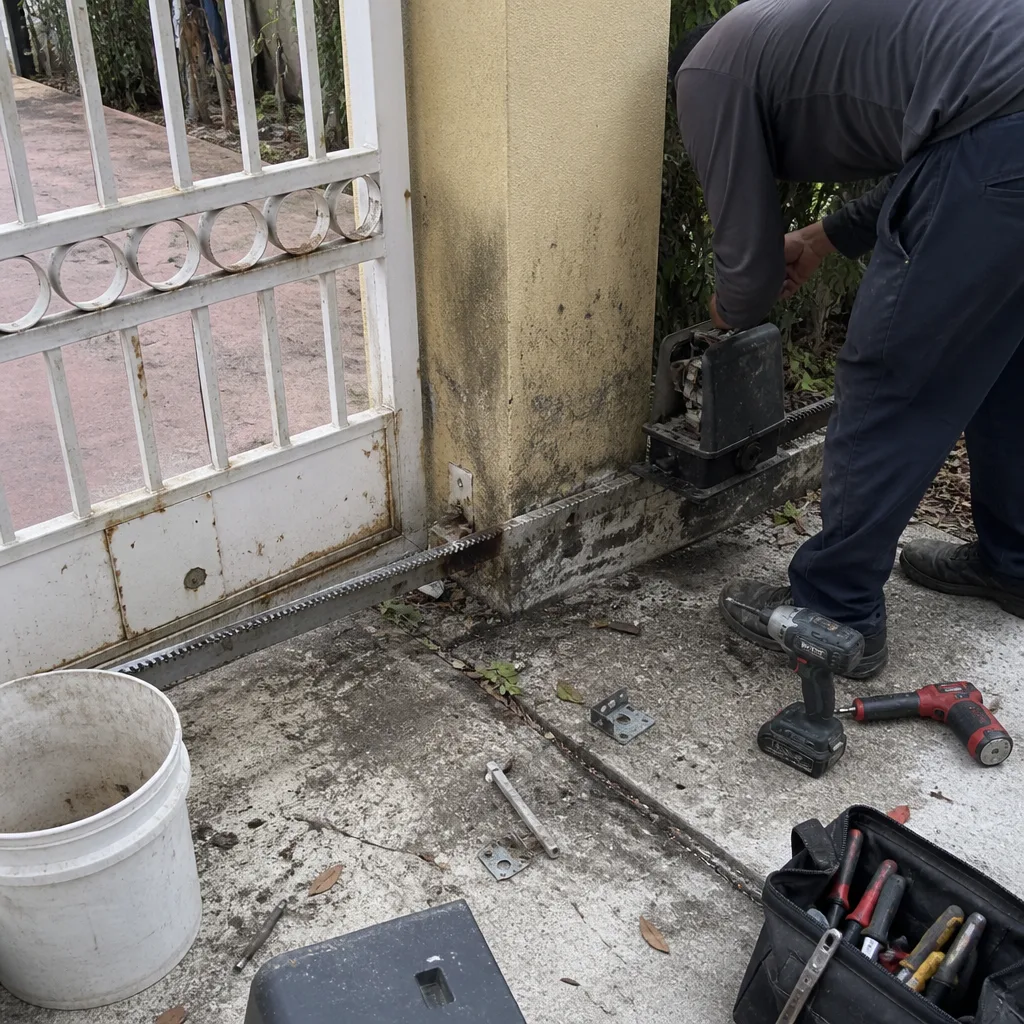 Before
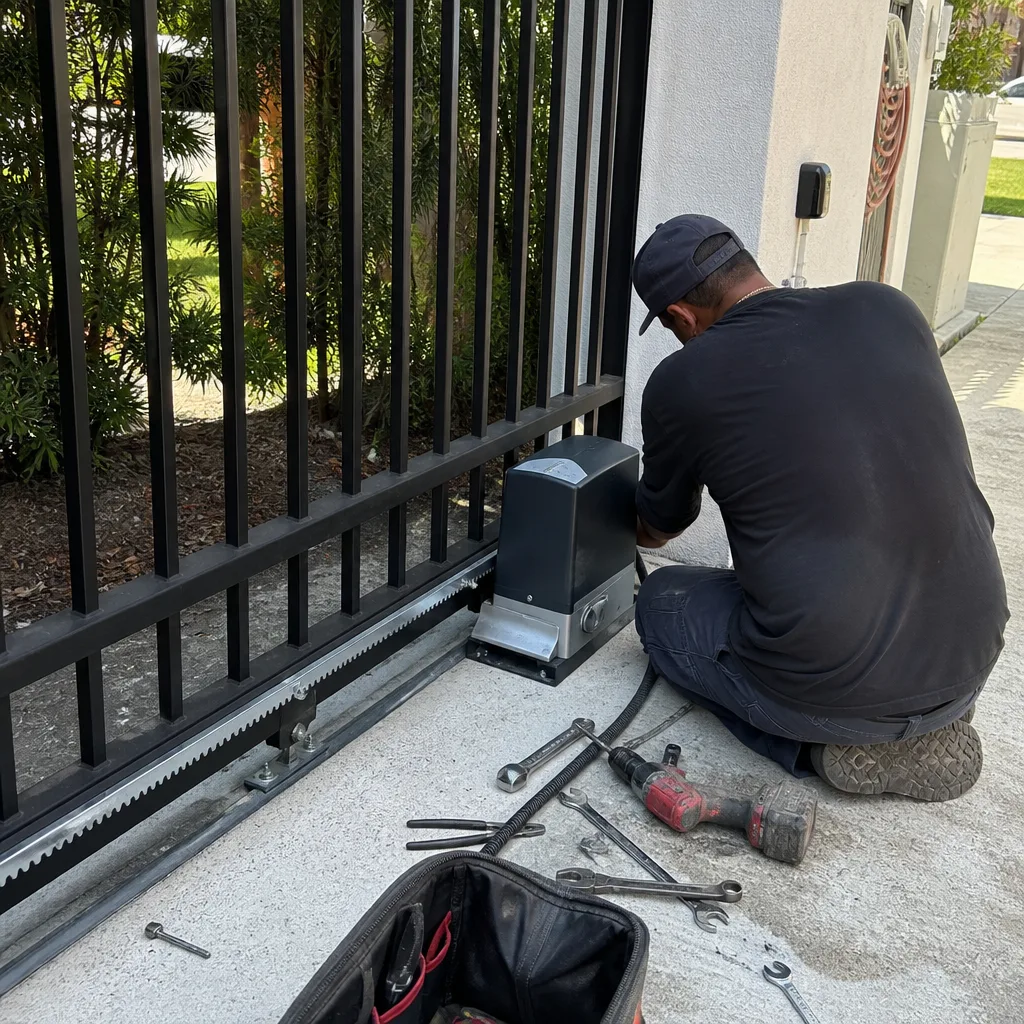 After
After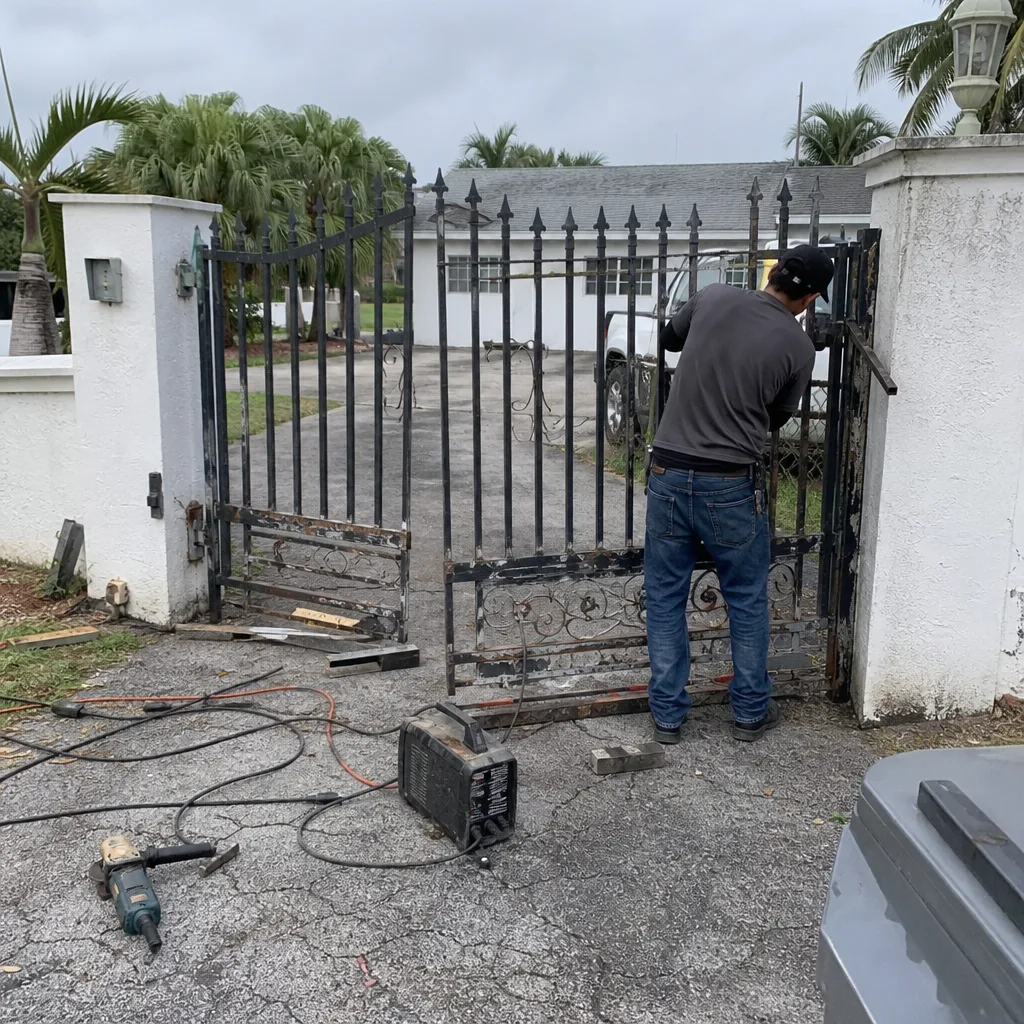 Before
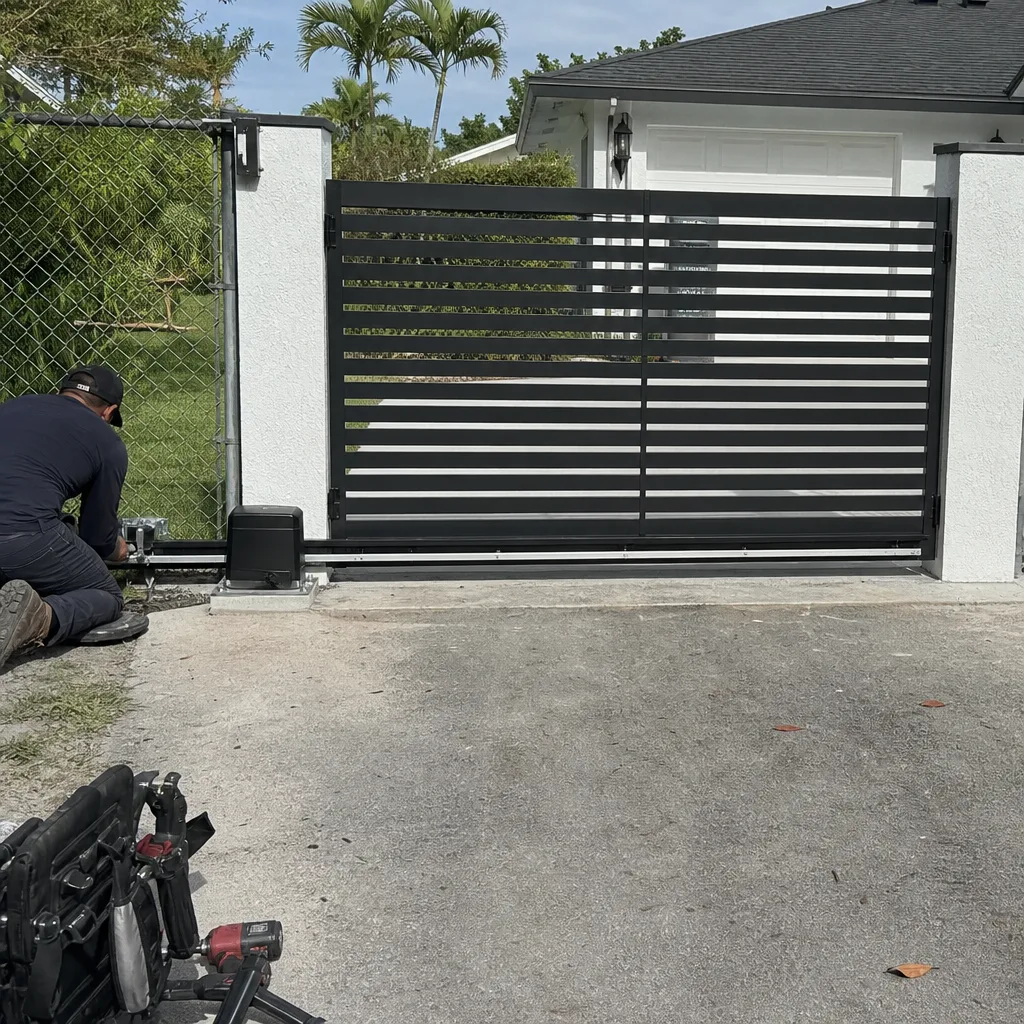 After
After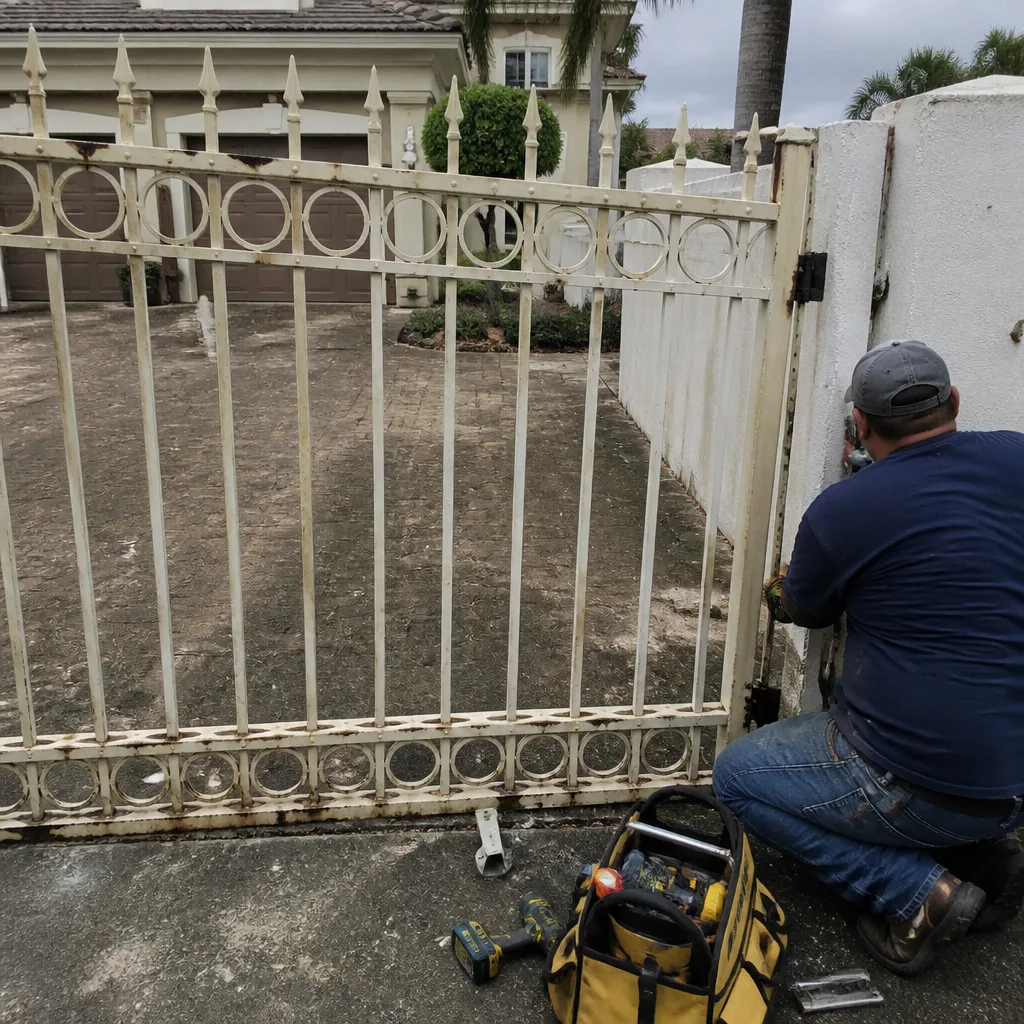 Before
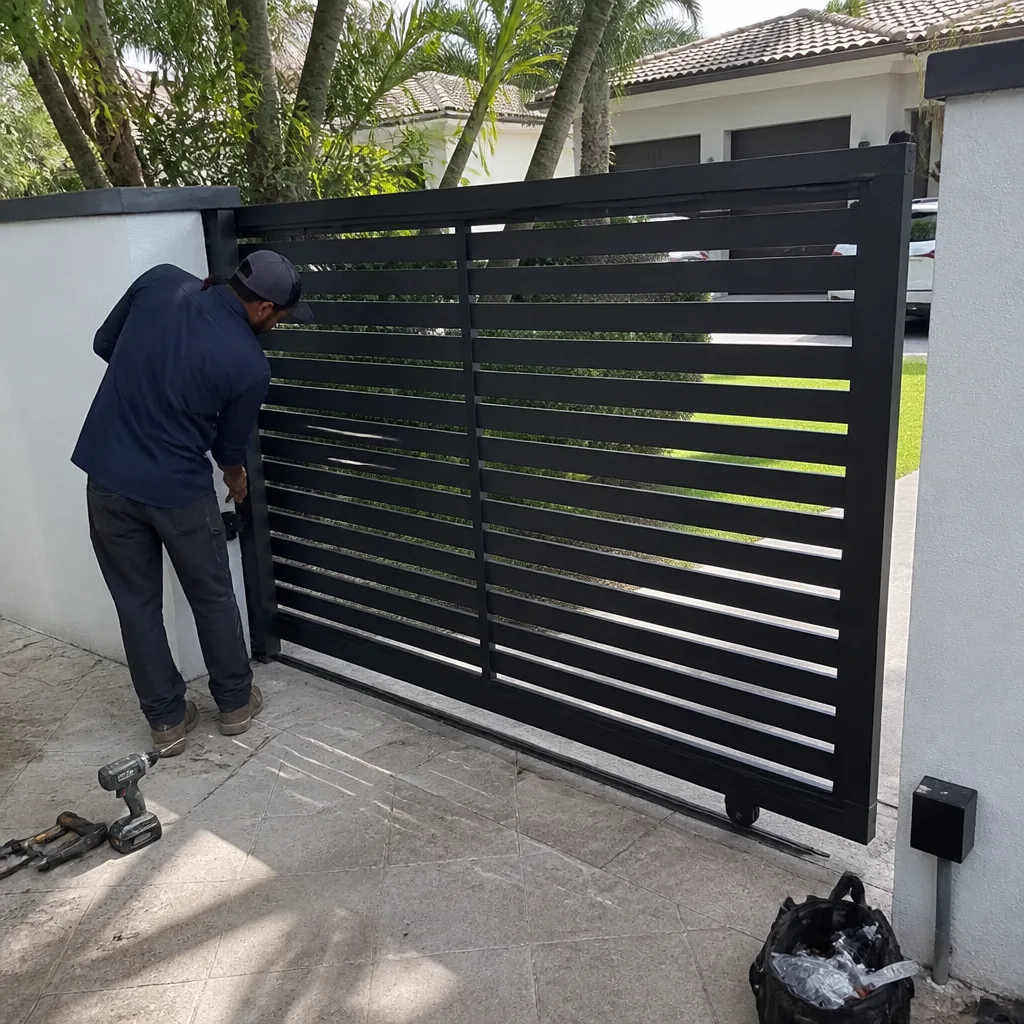 After
AfterWhen to Call a Professional
Call a professional when your gate is making grinding noises, moving at half speed, reversing mid-cycle, or failing to respond to remotes or keypads. Call when you see visible rust on hinges or the opener housing. Call when your breaker trips more than once. Call when your HOA tells you a repair needs written approval and you’re not sure how to navigate that. And call when you’d simply rather have someone who has seen hundreds of these exact failures in Miami diagnose it correctly the first time. Calder Gate Repair Miami offers free estimates, written pricing before any work starts, and a 365-Day Done Right Promise on every repair. Call (850) 821-3781 and a live person will answer, day or night.
Frequently Asked Questions
Most gate repairs in Miami run between $150 and $850 depending on the problem. Minor fixes like limit switches and capacitors fall on the lower end; control boards and motors land higher. Calder Gate Repair gives every customer a written price before any work starts, so you know the exact number before you approve the job. Call (850) 821-3781 for a free estimate.
For most common repairs, yes. Calder Gate Repair answers calls with a live person 24/7, and our technicians are dispatched with a live, trackable arrival time. Severe corrosion damage or brand-specific parts that need to be ordered can extend the timeline. We’ll tell you upfront what the schedule looks like before you commit to anything.
If the repair is cosmetic or changes the appearance of the gate, opener, or control box, many Miami HOAs require written approval first. Like-for-like repairs generally don’t. Check your HOA’s architectural review section and document the existing setup with photos before any work begins. Calder Gate Repair has helped Miami homeowners navigate this process since 2009.
Miami’s combination of salt-laden coastal air, humidity above 75%, and intense summer heat accelerates corrosion on metal parts, degrades plastic gears, and shortens the life of electrical components. Coastal ZIP codes like Miami Beach and Brickell suffer most from salt corrosion, while inland areas like Doral see more heat-related failures.
Calder Gate Repair is factory-familiar with nine major brands: LiftMaster, FAAC, BFT, Linear, Viking, Ghost Controls, DoorKing, Elite, and Mighty Mule. That covers virtually every gate opener a Miami homeowner is likely to own, from the Italian brands common in Coral Gables to the workhorse units found in Kendall and Homestead.
It’s a written guarantee that applies to every Calder repair. If the repair fails within 365 days, we return at no charge. That’s not a verbal promise; it’s stated in writing on every job. It’s one of the three non-negotiable guarantees that come with every Calder Gate Repair visit, alongside written pricing before work starts and a free second visit if the repair fails.
The Bottom Line
Miami gates live harder lives than gates anywhere else in the continental U.S. Salt air, humidity, summer lightning, and HOA rules create a repair environment that generic guides don’t address. The right approach is to understand your gate’s anatomy, know which components fail first in your specific ZIP code, check your HOA and permit situation before visible work, and work with a company that puts pricing and guarantees in writing. Calder Gate Repair Miami has been operating in this market since 2009, and every job carries a written price, a written guarantee, and the 365-Day Done Right Promise. Call (850) 821-3781 for a free estimate, or learn more on our Calder Gate Repair Miami home page.
Written by Nico Alvarez, Owner at Calder Gate Repair Miami, serving Miami since 2009. For more guides & resources, visit our blog.